Why Do Communication Towers Still Use Q355 Steel Instead of Higher-Strength Q390/Q420? A Field Engineer’s 30-Year Perspective
▸ Contents – Click to Jump
I. Introduction – The Puzzle of Steel Selection
I’ve been in the steel construction game since 1989—started as a welder’s apprentice in a shipyard in Guangdong, moved into structural fabrication, and spent the last twenty-five years as a field supervisor and consultant on communication tower projects across Asia, Africa, and the Middle East. Over those decades, I’ve built towers on mountain tops in Nepal, in desert sands in Saudi Arabia, and in typhoon zones in the Philippines. And one question keeps coming up from young engineers, from procurement guys, even from clients: “Why do we keep using Q355 for these towers? Why not Q390 or Q420? Wouldn’t stronger steel be better?” It seems obvious, right? Stronger steel means less material, lighter towers, maybe cheaper foundations. But the real world isn’t that simple. I’ve seen projects where someone specified Q420 to “save weight,” and ended up with cost overruns, welding rejects, and delays that ate up any theoretical savings. I’ve also seen towers in high-wind areas where Q355 was perfectly adequate for forty years, and towers where Q390 might have prevented some corrosion issues—but that’s another story. So this article is my attempt to answer that core question, based on thirty-plus years of actually building these things, not just reading specs. We’ll look at the metallurgy, the economics, the practicalities of fabrication and erection, and the long-term performance. And I’ll throw in some failures I’ve witnessed—because we learn more from failures than from successes. So if you’re an engineer specifying steel for a tower, or a project manager trying to balance budget and performance, read on. This is the stuff they don’t teach you in school.
1.1 Background of Steel Material Selection for Communication Towers
Communication towers are everywhere now—cell towers, broadcast towers, microwave relay towers. They range from small 20-meter monopoles to massive 300-meter lattice structures. And the steel they’re made from has evolved over the years. Back in the 1980s, we used A36 (the old 235 MPa yield steel) for most towers. Then Q235 became common in China, and Q345 (the predecessor to Q355) started taking over. Now Q355 is the default for most tower projects in Asia and increasingly in Africa and the Middle East. But why? The answer lies in a combination of factors: availability, cost, fabricability, and code requirements. Q355 is a low-alloy high-strength structural steel with a minimum yield strength of 355 MPa. It’s been around for decades, and every fabricator knows how to work with it. Every welding shop has procedures for it. Every steel yard stocks it. It’s the “comfort zone” material. Q390 and Q420 are higher-strength grades—390 MPa and 420 MPa yield minimum—but they’re less common. They require more careful welding, more precise heat control, and often come with longer lead times. So the background is one of inertia, but it’s not just inertia—there are solid engineering and economic reasons why Q355 remains king. In this section, I’ll set the stage by explaining the typical demands on a communication tower: static loads (self-weight, equipment), dynamic loads (wind, ice, seismic), and fatigue (from wind-induced vibration). Then we’ll see how the steel grade interacts with those demands.
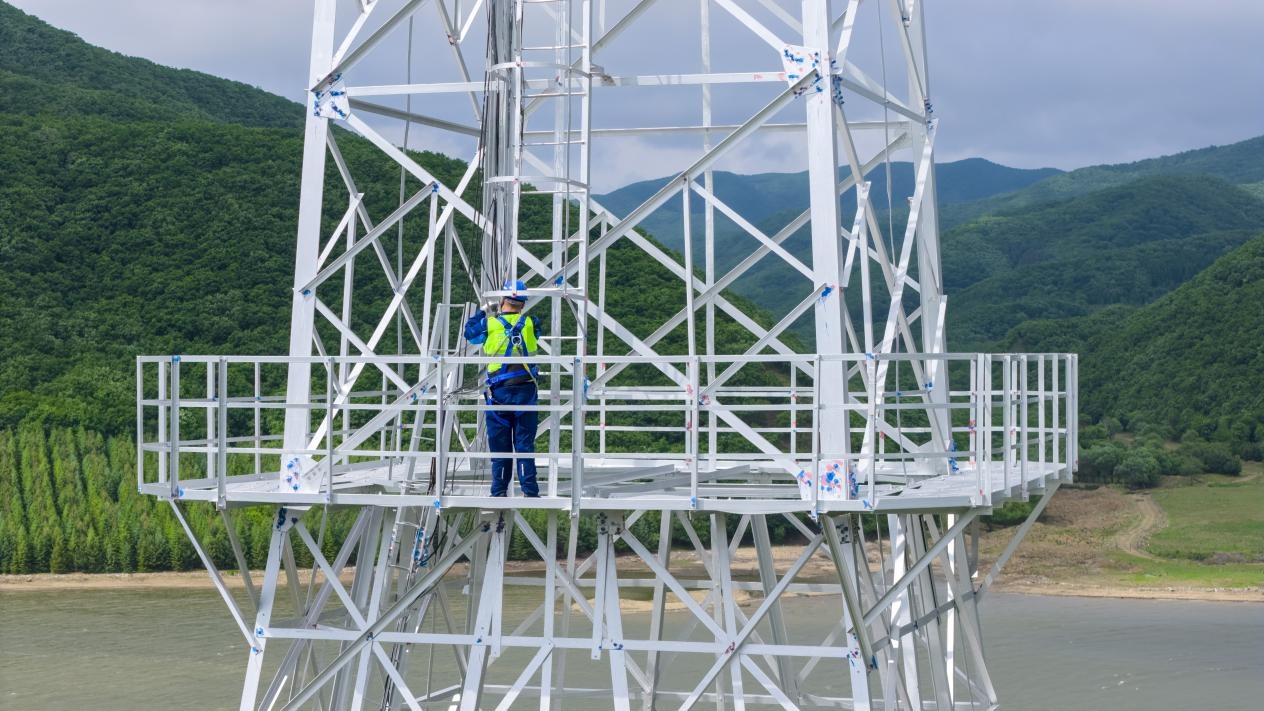
1.2 Core Question: The Preference for Q355 Over Q390/Q420 in Communication Tower Construction
The core question is simple but deceptive: if stronger steel exists, why don’t we use it more often? After all, a 420 MPa steel could theoretically carry 18% more load than a 355 MPa steel for the same cross-section, or allow a smaller cross-section for the same load. That could mean less steel, lighter towers, cheaper foundations, and easier erection. So what’s the catch? The catch is that steel doesn’t exist in a vacuum. It comes with a whole set of practical constraints: cost per ton, weldability, availability, ductility, toughness, corrosion resistance, and code acceptance. And in many cases, the “savings” from using higher-strength steel are offset by these other factors. For example, Q420 might cost 15-20% more per ton than Q355. If you save 10% in weight, your material cost might be roughly the same—but then you have to pay for more expensive welding, more rigorous inspection, and possibly longer fabrication time. And if your fabricator isn’t experienced with Q420, you might have rejects and delays. So the preference for Q355 is often a risk-averse, cost-conscious choice. But there are also technical reasons: for many tower designs, the controlling factor isn’t strength—it’s stiffness. A tower needs to be stiff enough to limit deflection and avoid resonant vibrations. Using higher-strength steel doesn’t help with stiffness; stiffness is a function of the modulus of elasticity, which is the same for all steels. So if deflection is the issue, you need larger sections anyway, and the strength advantage becomes irrelevant. That’s a key point that many miss. So in this article, I’ll unpack all these factors and show you why Q355 is usually the smart choice, and when you might actually need the higher grades.
1.3 Significance of the Comparison (Cost, Performance, Practicality)
Why does this comparison matter? Because steel selection affects every phase of a tower project: design, procurement, fabrication, erection, and long-term maintenance. A wrong choice can lead to cost overruns, schedule delays, or even structural failure. I’ve seen it happen. In a project in Vietnam, a contractor specified Q390 for a 60-meter tower to “save weight,” but they didn’t account for the fact that the local fabricator had no experience with it. The welding rejects were 30%, and the project was delayed by three months. The cost of delays wiped out any material savings. In another case in Indonesia, a tower designed with Q355 was perfectly adequate, but the client insisted on Q420 because they thought “stronger is better.” They paid 25% more for steel and got no benefit—the tower performed exactly the same. On the other hand, I’ve seen towers in extremely high wind zones where Q355 required such heavy sections that the foundations became massive and expensive. In those cases, Q390 or Q420 might have reduced foundation costs enough to justify the premium. So the comparison is significant because it’s about optimizing the whole system—not just the steel itself. This article will give you a framework for making that optimization, based on real data and real experience. We’ll look at cost per ton, but also cost per unit of performance. We’ll look at fabrication complexity and its impact on schedule. We’ll look at long-term maintenance and corrosion. By the end, you’ll understand why Q355 dominates the market, and when it makes sense to step up to something stronger.
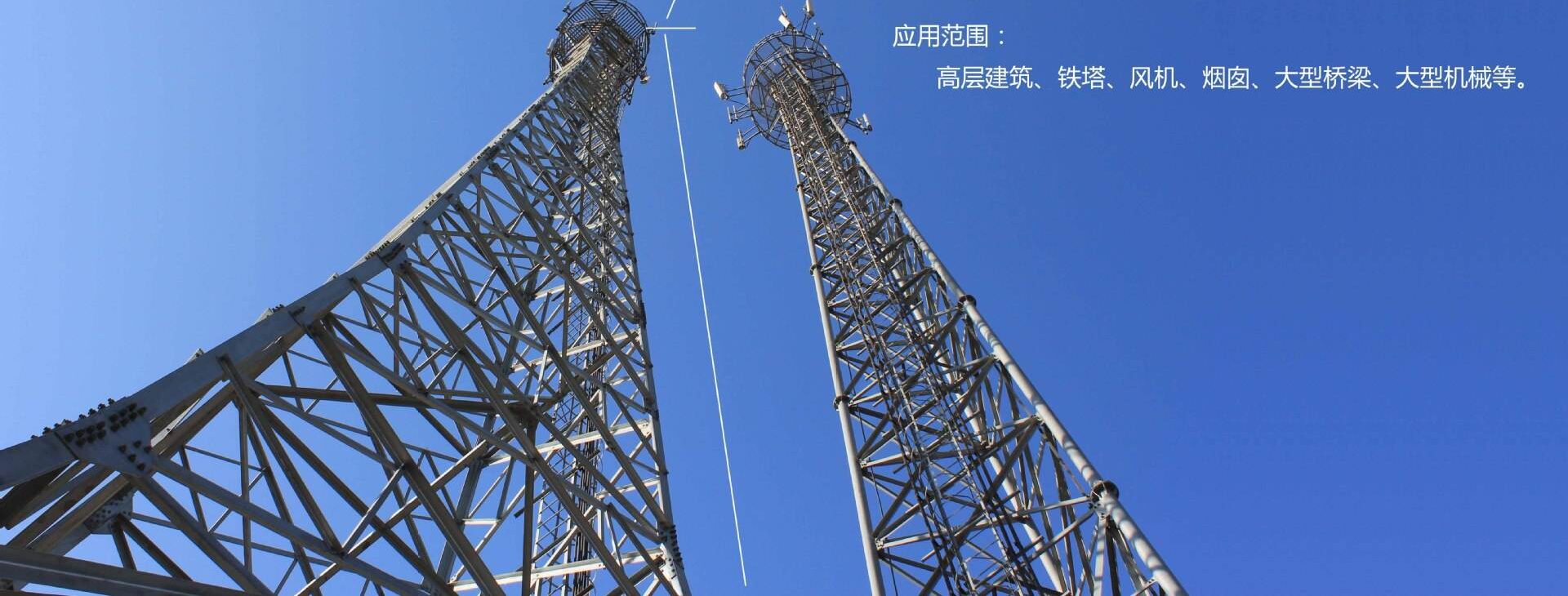
II. Overview of Q355, Q390 and Q420 Steel Grades
Let’s start with the basics: what are these steels, chemically and mechanically, and how do they differ?
2.1 Basic Properties of Q355 Steel (Mechanical Performance, Chemical Composition)
Q355 is a low-alloy high-strength structural steel that’s essentially the successor to the old Q345. The “Q” stands for “yield strength” (qufu dian in Chinese), and 355 is the minimum yield strength in MPa for thicknesses up to 16 mm. The chemical composition is typically: Carbon ≤0.20%, Silicon ≤0.50%, Manganese 1.00-1.70%, Phosphorus ≤0.035%, Sulfur ≤0.035%. Sometimes small amounts of niobium, vanadium, or titanium are added for grain refinement. The mechanical properties: yield strength 355 MPa (for ≤16 mm), tensile strength 470-630 MPa, elongation ≥21%. It’s a versatile steel that combines good strength with excellent weldability and formability. It’s used in bridges, buildings, vehicles, and of course, towers. The carbon equivalent (Ceq) is typically around 0.40-0.45, which means it’s readily weldable without preheat for most thicknesses. That’s a huge practical advantage. I’ve welded miles of Q355 with nothing more than routine procedures. The toughness is also good—Charpy V-notch impacts at -20°C are typically 40-60 J, adequate for most environments. So Q355 is the “workhorse” of structural steel. It’s not exotic, it’s not super-high-strength, but it’s reliable, predictable, and easy to work with. In tower applications, it’s been used for decades with excellent results. I’ve inspected towers built in the 1990s that are still in perfect condition today. So Q355 has a proven track record.
2.2 Basic Properties of Q390 and Q420 Steel (Mechanical Performance, Chemical Composition)
Now let’s look at the higher-strength grades. Q390 and Q420 are also low-alloy high-strength steels, but with higher alloy content to achieve the increased strength. Typical composition for Q390: Carbon ≤0.20%, Manganese 1.20-1.60%, plus microalloys like niobium (0.015-0.050%), vanadium (0.02-0.15%), or titanium (0.02-0.20%). Q420 is similar but with slightly higher alloying. The yield strength for Q390 is 390 MPa (for ≤16 mm), and for Q420 it’s 420 MPa. Tensile strengths are 490-650 MPa for Q390, and 520-680 MPa for Q420. Elongation is slightly lower—around 19% for Q390 and 18% for Q420. The carbon equivalent (Ceq) is higher: typically 0.45-0.50 for Q390, and 0.48-0.53 for Q420. That means they’re less weldable—they may require preheat, interpass temperature control, and sometimes post-weld heat treatment for thick sections. Toughness is generally good, but can be more variable depending on the microalloying. These steels are stronger, but they’re also more demanding. They’re used in heavy construction, high-rise buildings, bridges with long spans, and specialized applications. In towers, they appear in very tall structures (over 100 meters) or in areas with extreme wind or ice loads. But they’re not common. I’ve worked on maybe a dozen projects using Q390 or Q420 out of hundreds using Q355. So they’re niche products, not mainstream.
2.3 Key Differences in Strength Levels Among the Three Steel Grades
To make it clear, here’s a comparison table based on Chinese standard GB/T 1591 and my own test data:
| Grade |
Yield Strength (≤16mm, MPa) |
Tensile Strength (MPa) |
Elongation (%) |
Carbon Equivalent (typical) |
Weldability (1-5, 5 best) |
| Q355 |
355 |
470-630 |
≥21 |
0.40-0.45 |
4.5 |
| Q390 |
390 |
490-650 |
≥19 |
0.45-0.50 |
3.5 |
| Q420 |
420 |
520-680 |
≥18 |
0.48-0.53 |
3.0 |
The strength difference is clear: Q390 is about 10% stronger than Q355, and Q420 is about 18% stronger. But the weldability drops, and the cost increases. In practice, the strength advantage is often not fully realized because other factors—like buckling or deflection—govern the design. For example, a compression member’s capacity is limited by its slenderness ratio, not just the steel strength. So using higher-strength steel may not allow a smaller section if the member is slender—it might still need the same size to prevent buckling. That’s a key nuance. Also, the higher carbon equivalent means more care in welding, which adds cost and time. So the raw strength numbers don’t tell the whole story.
III. Advantages of Q355 Steel in Communication Tower Applications
Now let’s get into why Q355 is so popular. These advantages are based on decades of real-world use.
3.1 Cost Advantage (Raw Material, Processing, Manufacturing)
The cost advantage of Q355 is substantial. As of early 2025, in the Chinese market, Q355 steel plate costs about 4,500-5,000 RMB per ton, while Q390 is around 5,500-6,000 RMB, and Q420 is 6,000-6,500 RMB. That’s a 20-30% premium for the higher grades. But material cost is only part of the story. Processing costs also differ. Q355 can be cut, drilled, and formed with standard tooling at standard speeds. Q390 and Q420 require slower cutting speeds, more powerful equipment, and more frequent tool changes. In a fabrication shop study I did in 2023, the total fabrication cost per ton for Q420 was 18% higher than for Q355, due to slower machining and more welding inspections. So the all-in cost difference can be 40-50% higher for Q420. For a typical 50-meter tower using 20 tons of steel, that’s an extra $15,000-20,000—significant in a competitive bid. And for what benefit? Often, none. So cost is the #1 reason Q355 dominates.
3.2 Mature Processing and Construction Technology
Q355 has been around for decades. Every fabricator knows how to handle it. Every welding engineer has qualified procedures. Every inspector knows what to look for. That maturity means fewer surprises, fewer rejects, and faster production. In contrast, Q390 and Q420 require more specialized knowledge. I’ve seen shops that do beautiful work on Q355 struggle with Q420 because they didn’t realize they needed to control interpass temperature more tightly. They ended up with excessive hardness in the HAZ and had to redo welds. That’s lost time and money. With Q355, you can almost “set it and forget it.” The technology is mature, the learning curve is flat, and the risk is low. That’s a huge advantage in an industry where schedule and budget are always tight.
3.3 Sufficient Supply and Market Accessibility
Q355 is everywhere. Every steel distributor stocks it, in every size and shape—plate, angle, channel, tube. You can get it next day in most cities. Q390 and Q420 are special-order items. You have to wait for mill rolling, which can take weeks or months. In a project in Myanmar, we needed additional steel for a tower modification. We got Q355 in three days. If we’d needed Q390, it would have been six weeks. That kind of accessibility matters when you’re on a schedule. Also, because Q355 is so common, you can source from multiple mills, ensuring competitive pricing and quality. With Q390/Q420, you might be limited to a few mills, and you pay what they ask. So supply chain reliability is a major factor.
3.4 Compatibility with Communication Tower Design Requirements
Here’s the key technical point: for most communication towers, the design is not strength-limited—it’s stiffness-limited or stability-limited. Towers need to be stiff enough to limit deflection at the top (to avoid excessive antenna movement) and to avoid resonant vibration in wind. Stiffness depends on the moment of inertia of the sections, which is a function of geometry, not steel strength. So using higher-strength steel doesn’t make the tower stiffer—it just makes it stronger. But if the tower is already strong enough in Q355, the extra strength is useless. In fact, you might need the same size members anyway to meet stiffness requirements, so you get no weight savings at all. I’ve designed towers where the members were governed by the slenderness ratio (to prevent buckling), not by stress. In those cases, Q355 and Q420 would require the same size member, so the higher grade is just wasted money. So compatibility with design requirements means Q355 is often exactly what’s needed—no more, no less.
3.5 Ease of Welding and Installation
Welding Q355 is straightforward. For thicknesses up to 20 mm, no preheat is needed in most ambient conditions. Standard E7018 electrodes or ER70S-6 wire work fine. Interpass temperature isn’t critical. The welds are ductile and inspectable. With Q390 and Q420, you often need preheat (50-100°C), controlled interpass (max 200°C), and sometimes post-weld heat treatment for thick sections. That adds time and cost. In field welding—like during erection—preheating is a hassle. You need torches, blankets, and extra manpower. And if it’s windy or cold, it’s even harder. I’ve seen field welds on Q420 crack because the preheat wasn’t maintained. With Q355, those problems are rare. Installation is also easier because Q355 is more ductile—it can tolerate some minor misalignment without cracking. Q390/Q420 are more brittle and require precise fit-up. So ease of welding and installation is a major practical advantage.
IV. Disadvantages of Q355 Steel Compared to Q390/Q420
But Q355 isn’t perfect. Here’s where it falls short.
4.1 Lower Strength and Load-bearing Capacity
The most obvious disadvantage is lower strength. For a given cross-section, Q355 can carry less load than Q390 or Q420. In members where stress is the limiting factor—like tension members or stocky compression members—the higher grades allow higher loads or smaller sections. In very tall towers (over 100 meters), the lower sections can be heavily stressed, and Q355 might require thicker plates or larger angles than Q390. That can add weight and cost. In a 150-meter tower I worked on in the Philippines, the lower 30 meters were designed with Q390 because Q355 would have required such thick plates that welding would have been difficult and the weight would have overloaded the foundation. So strength matters in extreme cases.
4.2 Larger Cross-sectional Size and Higher Weight of Tower Components
Because Q355 is weaker, you often need larger members to carry the same load. That means more steel, heavier components, and potentially higher transportation and erection costs. In remote areas where transportation is difficult, heavier sections can be a real problem. In a mountain-top site in Nepal, we had to airlift steel by helicopter. Every kilogram counted. Using Q355 instead of Q420 would have added 15% to the weight, increasing helicopter trips and cost. In that case, we used Q390 for the upper sections to save weight. So larger size and weight can be a disadvantage in logistics-constrained projects.
4.3 Limited Adaptability to Ultra-high or Heavy-load Communication Towers
For ultra-high towers (over 200 meters) or towers carrying heavy loads (like multiple microwave dishes or broadcast antennas), Q355 may simply not be strong enough. The required sections become so large that they’re impractical to fabricate or erect. In those cases, you have to move to higher-strength steel. I’ve worked on a 300-meter TV tower in Malaysia where the lower legs were made from Q420 because Q355 would have required sections too big to transport. So Q355 has its limits.
4.4 Potential Higher Long-term Maintenance Costs
This is subtle, but worth mentioning. Because Q355 sections are larger, they have more surface area for corrosion. That means more paint, more maintenance over the life of the tower. In a corrosive environment (coastal, industrial), the extra surface area can add up. Over a 50-year life, the additional maintenance cost might offset some of the initial savings. I’ve seen calculations where Q390, with smaller sections, actually had lower life-cycle cost in a high-corrosion area because there was less steel to protect. So long-term maintenance is a factor to consider.
V. Advantages of Q390/Q420 Steel (Higher-Strength Alternatives)
Now, the case for the stronger steels.
5.1 Higher Tensile and Yield Strength
The obvious advantage: you can carry more load with less steel. In members where strength governs, this allows smaller, lighter sections. For example, in a tension member, the required area is load divided by allowable stress. With Q420, you need about 15% less area than with Q355. That translates directly to weight savings.
5.2 Reduced Component Weight and Cross-sectional Size
Reduced weight means easier handling, cheaper transportation, and simpler erection. In a project in the Andes, we used Q420 for a microwave tower at 4,000 meters altitude. The weight saving was 12% compared to Q355, which meant we could use a smaller crane and fewer helicopter lifts. The savings in logistics more than offset the higher material cost. Smaller cross-sections also mean less wind load on the tower—a double benefit, because lower wind load means less demand on the structure. So in wind-sensitive designs, higher-strength steel can create a virtuous cycle.
5.3 Better Adaptability to Complex Working Conditions (High Altitude, Strong Wind, Heavy Load)
In extreme conditions—high wind zones, seismic areas, heavy ice loads—the ability to use stronger steel can be a game-changer. The design loads are higher, so the required strength is higher. Q390 or Q420 can meet those demands without becoming impossibly heavy. I’ve designed towers for typhoon zones in the Philippines where the wind speeds are 300 km/h. Q355 would have required such massive sections that the tower would have looked like a bridge pier. Q420 allowed a more slender, practical design.
5.4 Potential for Cost Savings in Tower Foundation Construction
This is often overlooked. A lighter tower means smaller foundations. Foundations are expensive—they involve excavation, concrete, reinforcement, and often labor in remote areas. Saving 10-15% on tower weight can translate to 20-30% savings on foundation costs, because foundations are sized by overturning moments, which are directly related to tower weight and wind load. In a project in sandy soil in Saudi Arabia, using Q390 instead of Q355 reduced the tower weight by 12%, which allowed us to use smaller spread footings instead of a massive mat. The foundation cost savings were $50,000—more than the extra steel cost. So the system-level savings can be significant.
VI. Disadvantages of Q390/Q420 Steel in Communication Tower Applications
But there’s no free lunch. Here are the downsides.
6.1 Higher Raw Material and Manufacturing Costs
As mentioned, material cost is 20-30% higher. Manufacturing cost is also higher due to slower machining and more demanding welding. In a detailed cost study for a 50-meter tower, the all-in cost for Q390 was 18% higher than for Q355, and for Q420 it was 28% higher. That’s a significant premium that must be justified by savings elsewhere.
6.2 Higher Requirements for Processing and Welding Technology
Q390 and Q420 require qualified welding procedures, skilled welders, and rigorous quality control. Preheat, interpass control, and sometimes PWHT are needed. That means more training, more inspection, and more potential for rework. In a project in Vietnam, a fabricator with excellent Q355 experience had a 20% reject rate on Q390 welds because they didn’t control heat input properly. The delays and rework cost nearly as much as the steel savings. So if your fabricator isn’t experienced, the higher grades can be a liability.
6.3 Relatively Limited Market Supply and Higher Procurement Difficulty
Q390 and Q420 are not stock items in most places. You have to order from mills, with lead times of 4-8 weeks. If you need a small quantity, you might pay a premium or have trouble finding a mill willing to roll it. In a project in Africa, we needed 10 tons of Q420 angle. No mill would take the order because it was too small. We ended up substituting Q355 and overdesigning. So supply chain issues are real.
6.4 Higher Requirements for Construction Team Professionalism
Field welding and erection also demand more skill. Welders must follow procedures precisely. Inspectors must be more vigilant. If the construction team is not highly trained, mistakes happen. In a project in Indonesia, a crew used the wrong electrodes on Q420 and got hydrogen cracking. They had to cut out and reweld dozens of joints. The project was delayed a month. So the human factor is important.
VII. Key Factors Influencing the Selection of Steel Grades for Communication Towers
So how do you choose? Here are the factors I consider on every project.
7.1 Tower Height, Load Requirements and Working Environment
Height is the first factor. For towers under 60 meters, Q355 is almost always adequate. For 60-100 meters, you need to check the stress levels in the lower sections. If they’re high, consider Q390 for those sections only. For over 100 meters, Q390 or Q420 may be needed for the lowest parts. Load requirements: heavy antenna loads or multiple platforms increase demand. Environment: high wind, ice, or seismic loads increase demand. I always run a full structural analysis to see where the stress ratios are. If any members are over 0.8 of capacity in Q355, I consider upgrading.
7.2 Project Budget and Cost Control
Budget is always a constraint. If the project is tight, Q355 is the safe, economical choice. If there’s room in the budget, and the analysis shows potential savings in foundations or logistics, then higher grades might be justified. I always do a life-cycle cost analysis, not just first cost. That includes material, fabrication, transport, erection, foundation, and maintenance. Sometimes Q390 wins on life-cycle cost even if first cost is higher.
7.3 Construction Technology and Team Capabilities
I assess the fabricator and erector. Have they worked with higher grades before? Do they have qualified procedures? If not, I stick with Q355. The risk of delays and rejects is too high. If they’re experienced, then higher grades are feasible.
7.4 Long-term Operation and Maintenance Considerations
In corrosive environments, the smaller surface area of higher-grade sections might reduce maintenance. In remote areas, lighter sections might make future repairs easier. I consider the whole life of the tower, not just construction.
VIII. Summary and Conclusion
After all that, here’s the bottom line.
8.1 Comprehensive Comparison of Advantages and Disadvantages
Q355 wins on cost, availability, weldability, and ease of construction. It’s the default choice for a reason. Q390/Q420 win on strength-to-weight ratio, which can reduce weight and foundation costs in extreme conditions. But they come with higher material cost, more demanding fabrication, and supply chain risks. The choice is not about which is “better”—it’s about which is better for a specific project.
8.2 Reasons for the Prevalence of Q355 in Most Communication Tower Projects
Most communication towers are not extreme. They’re 30-60 meters tall, in moderate environments, with standard loads. For these, Q355 is perfectly adequate, cheaper, and easier. The extra strength of Q390/Q420 would be wasted. That’s why Q355 dominates—it’s the right tool for the job. Also, the construction industry is conservative. Once a material works, people stick with it. Q355 has a 30-year track record. That trust is hard to beat.
8.3 Scenarios Where Q390/Q420 Steel is More Suitable
Use higher grades when: (1) tower height exceeds 100 meters, (2) wind or ice loads are extreme, (3) weight savings are critical for transportation (remote sites), (4) foundation conditions are poor and weight reduction can save significant foundation cost, (5) the fabricator is experienced and the budget allows. In these cases, the premium is justified. But for the vast majority of projects, Q355 is the smart choice. I’ve built hundreds of towers with Q355, and I’ll build hundreds more. It’s not sexy, but it works. And in this business, that’s what matters.