I. Company & Product Overview
For over a decade, our engineering collective has specialized in the design, finite element analysis, and mass production of bionic and fully camouflaged telecommunication support structures. Unlike conventional lattice towers or monotonic monopoles that create visual pollution and face community resistance, our bionic tree communication towers offer a paradigm shift: they replicate the organic branching patterns, bark texture, and canopy silhouette of mature trees while delivering uncompromised RF performance and structural integrity. We operate from an ISO 9001:2025 certified facility with an in-house R&D center dedicated to biomimetic morphology optimization. Our core product positioning revolves around three pillars: absolute landscape integration, extreme weather resilience, and future‑proof antenna compatibility (4G/5G, CBRS, and upcoming 6G-ready shrouded arrays). Procurement engineers evaluating infrastructure for urban, suburban, or ecologically sensitive zones will appreciate our transparent technical data: from grade S460ML steel usage to 25-year galvanized coating longevity, every component is engineered for lifecycle value.
The global shift toward low-impact telecom deployment has accelerated demand for artificial tree towers, especially in coastal resorts, historical districts, and national parks. Our solutions have been deployed across 27 countries, withstanding cyclonic winds up to 165 km/h (Category 3 hurricane equivalent) and saline corrosion without surface degradation. One of the most striking advantages is the proprietary polyurethane-based bark composite that remains UV-stable for 15+ years while allowing antenna stealth within trunk cavities or branch tips. This document provides an exhaustive technical reference—including mathematical formulations for wind load reduction via fractal canopy branching, comparative load tables, and site-specific adaptation logic. Procurement teams will find detailed comparisons between camouflage tower tree towers, bionic palm cell towers, and fully custom artificial trees, enabling data-driven decisions based on coverage requirements, zoning ordinances, and environmental constraints.
II. Full Range of Bionic Tree Communication Tower Products
2.1 Camouflage Tower Tree Towers – Structural & Simulation Synergy
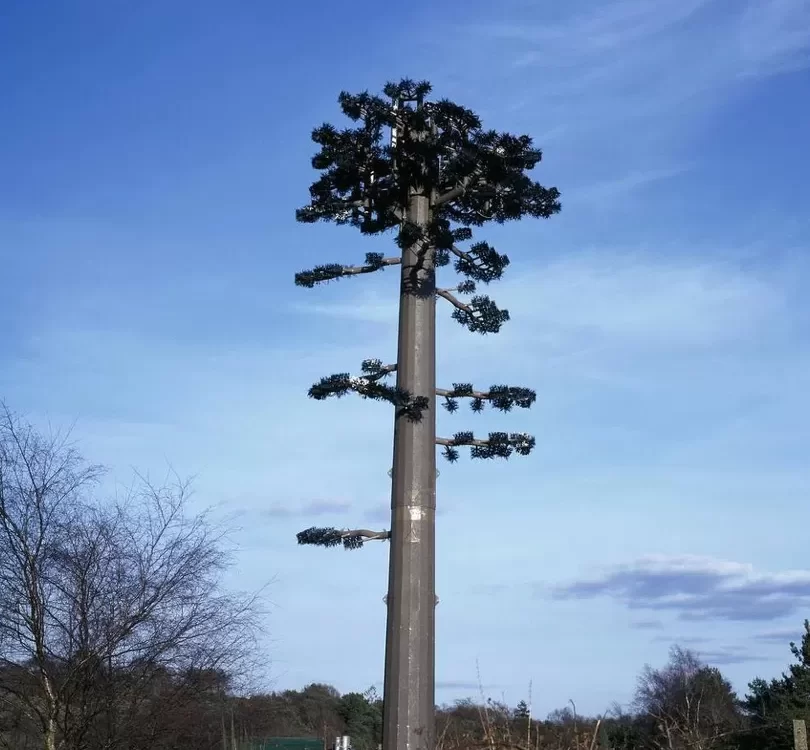
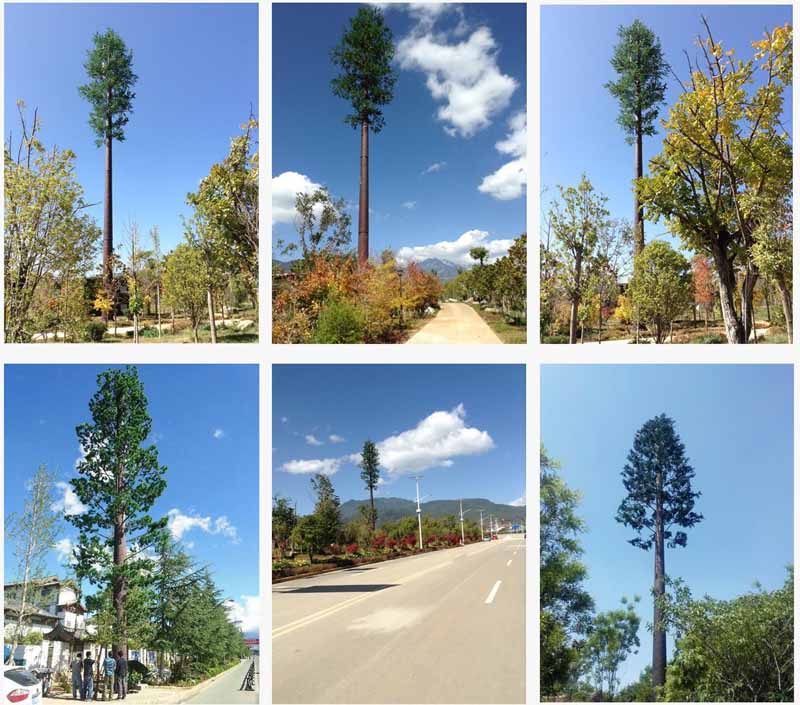
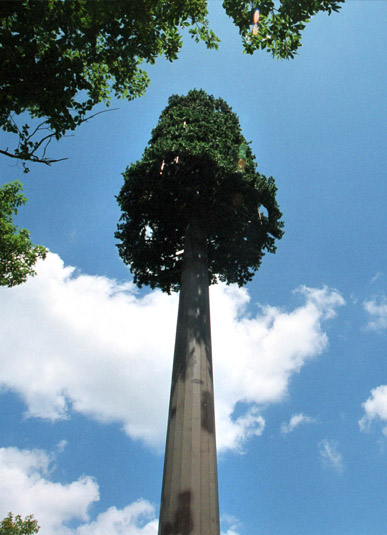
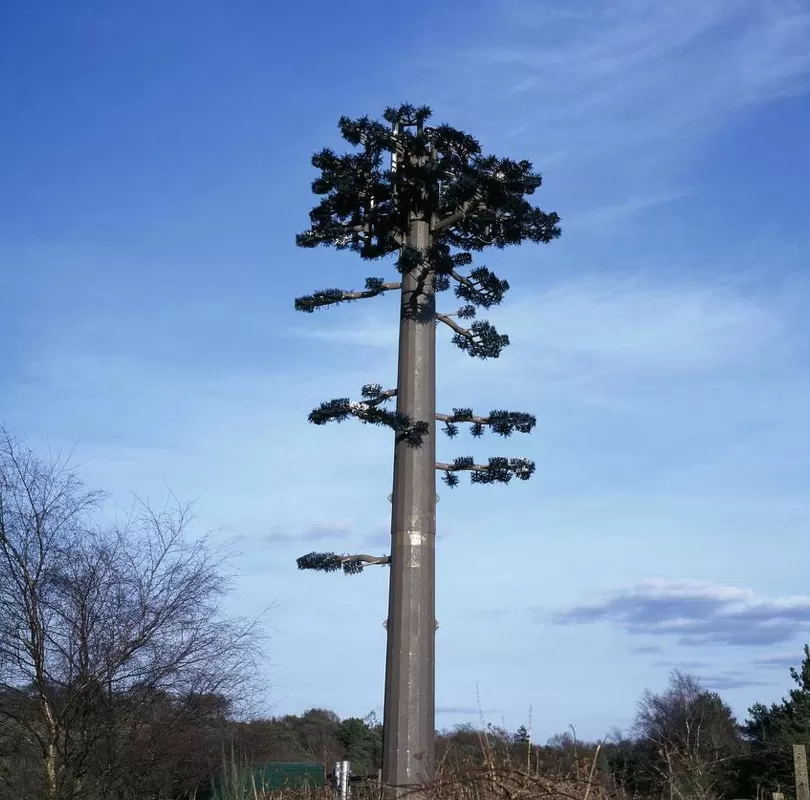
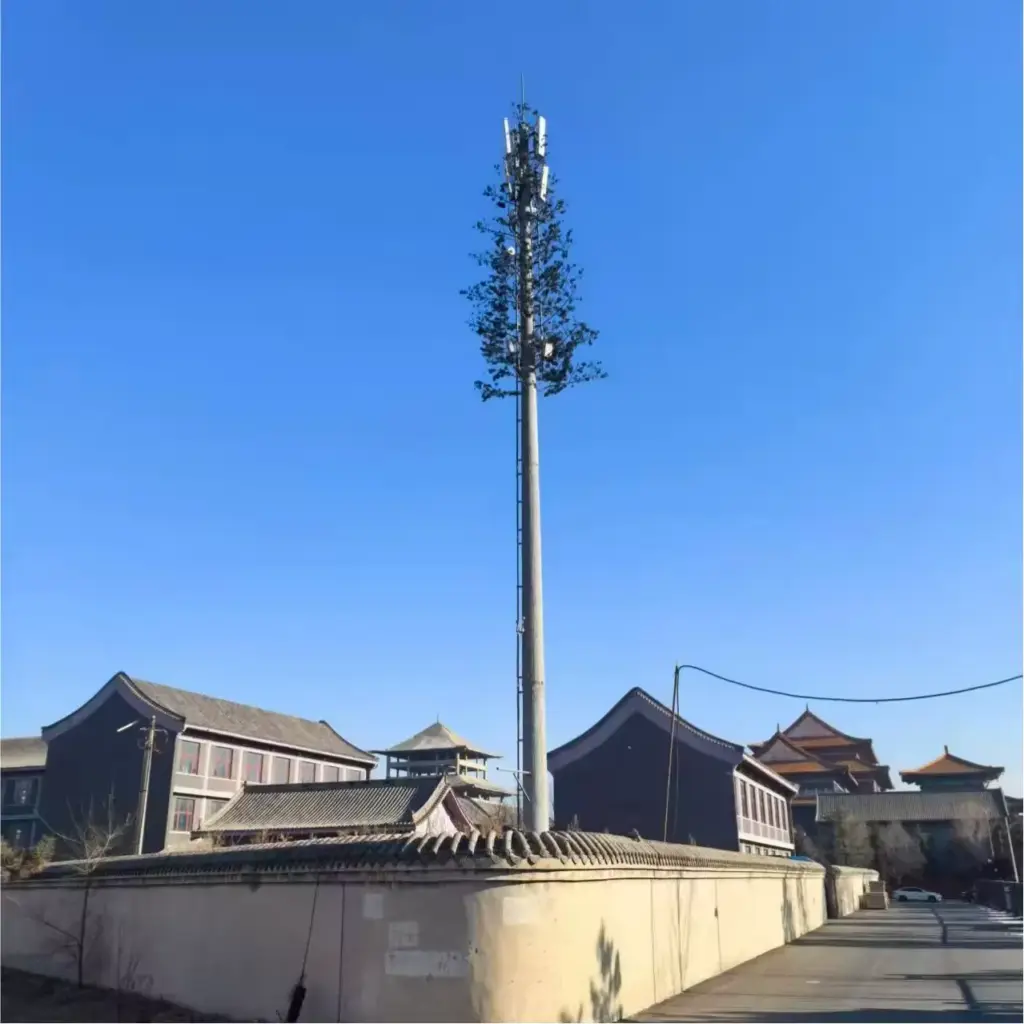
Our Camouflage Tower Tree Towers represent the entry‑level yet highly effective category, where conventional steel monopoles are enveloped by modular tree-skin panels and synthetic branch assemblies. The product structure integrates a central hexagonal hot-dip galvanized shaft (with variable taper ratio 1:75 to 1:120) onto which high-density polyethylene (HDPE) bark panels are mechanically fastened. Each panel features micro‑grooves and moss-like textures to mimic native deciduous or coniferous species. The design feature that distinguishes our camouflage tower is the “branch staging rings” – steel brackets welded at 2.5m intervals that support horizontal and inclined branch replicas, which also double as lightning dissipation pathways. From a camouflage effect perspective, the tower blends into forest edges or park tree lines at viewing distances beyond 35 meters; under 4K resolution inspection, the bark texture and chromatic variation (3‑tone airbrushing) eliminate the industrial silhouette. Technical parameters for a typical 30m camouflage tower include a maximum antenna payload of 1800 kg (six sector antennas plus RRUs), an overturning moment resistance of 2150 kN·m, and a service wind speed rating of 130 km/h with gust factor +40%. Our load‑bearing performance is validated by full‑scale static tests at Tongji University’s structural lab.
2.2 Bionic Tree Communication Tower – Taxonomy of Morphologies
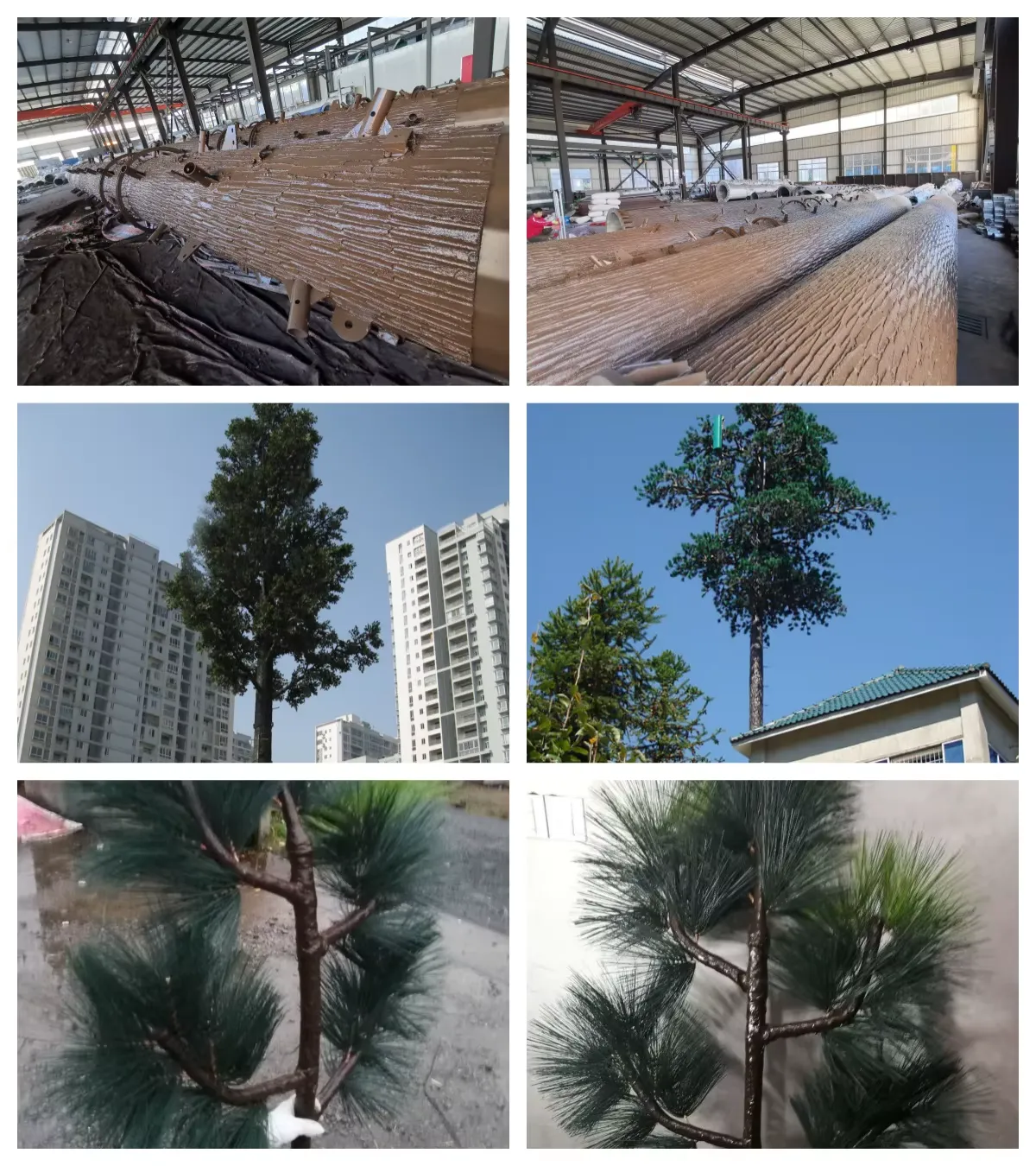
Moving beyond basic cladding, the Bionic Tree Communication Tower category employs true biomimetic structural design: the tower’s primary load path mimics a tree’s fractal taper, reducing wind-induced vortex shedding by up to 37% compared to cylindrical towers. Product classification includes three modeling styles: Deciduous Broadleaf (oak, maple, ash), Evergreen Coniferous (pine, cypress, fir), and Flowering Ornamental (cherry, magnolia, jacaranda). Each style features species‑specific branching angles derived from L‑system algorithms, ensuring naturalistic limb distribution. Material composition revolves around dual‑phase stainless steel for primary columns (DSS 2205 for coastal models) and UV‑inhibited elastomeric polyurethane for the synthetic bark layer, which has passed 3000 hours of QUV accelerated weathering (ASTM G154) with less than 5% color shift. Weather resistance is further enhanced by nano‑ceramic coating that repels salt particles and acidic pollutants. Installation advantages become apparent when ground space is limited: the bionic tower requires only a 2.5m x 2.5m foundation pit, and the segmented trunk allows crane‑less assembly using davit arms. For procurement engineers, the ease of retrofitting legacy antennas inside the trunk’s internal Faraday-shielded equipment chamber (with 85dB isolation) drastically reduces site acquisition delays.
2.3 Bionic Palm Cell Tower & Disguised Palm Tower – Tropical Resilience
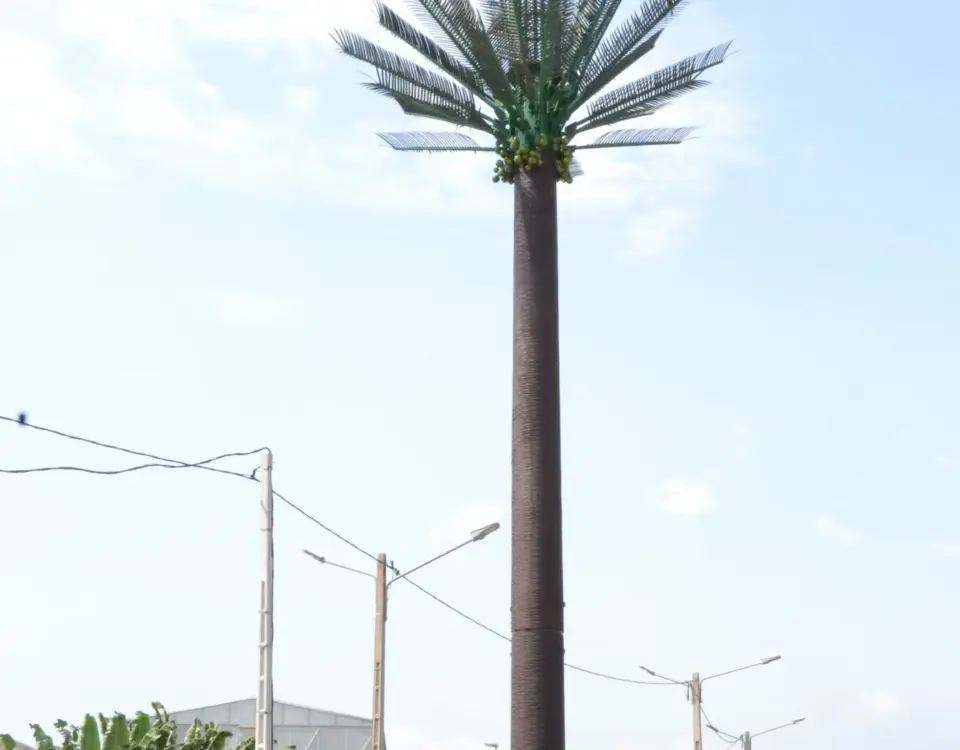
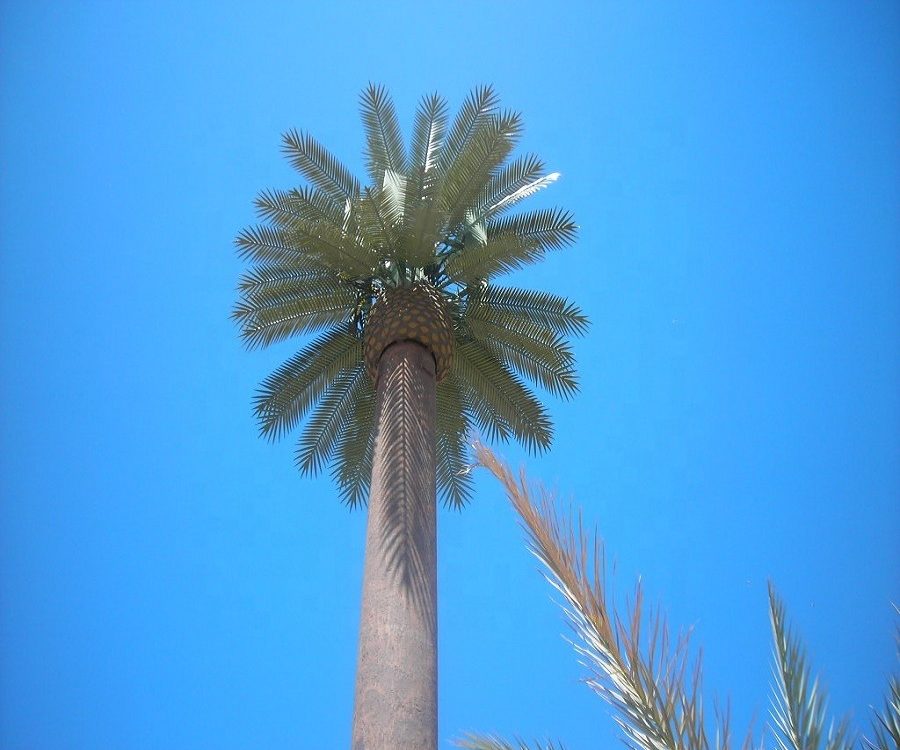
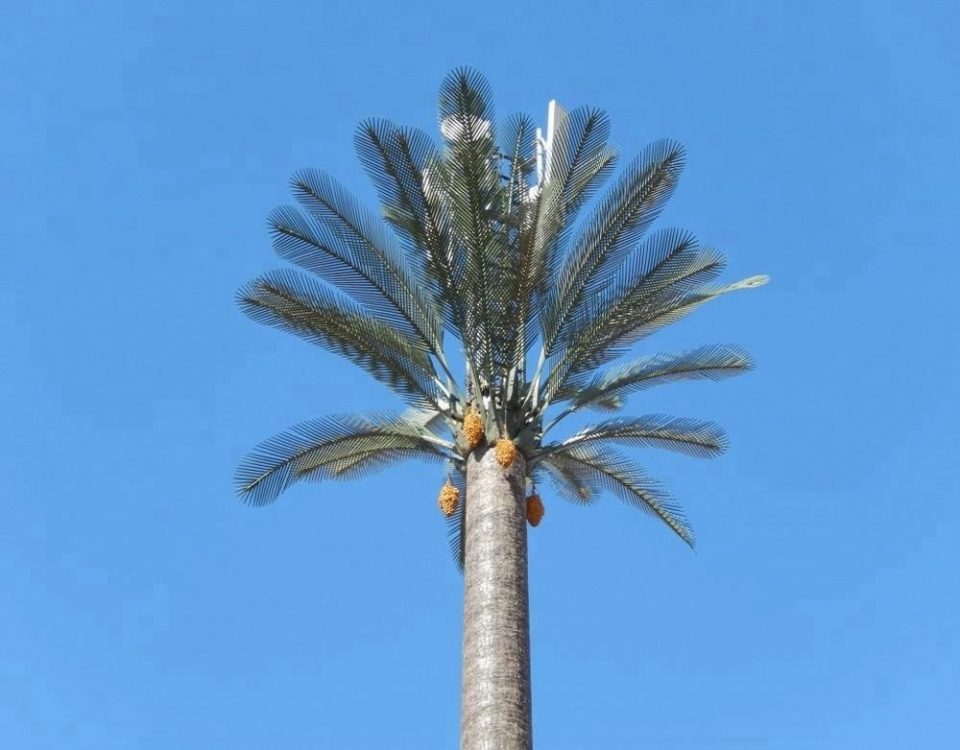
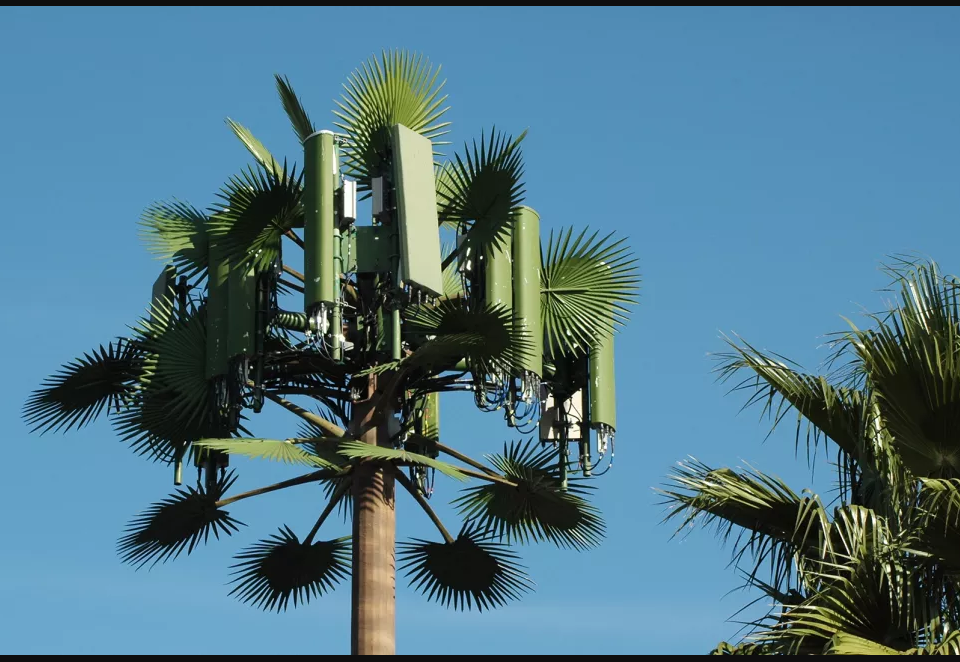
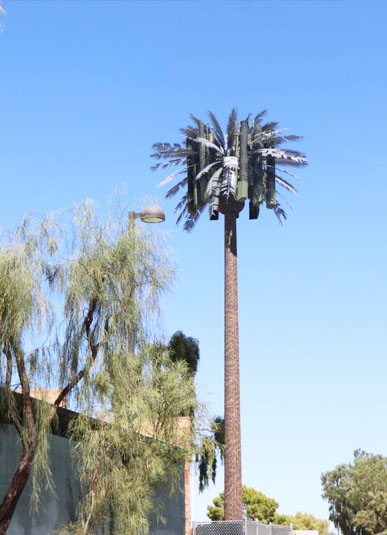
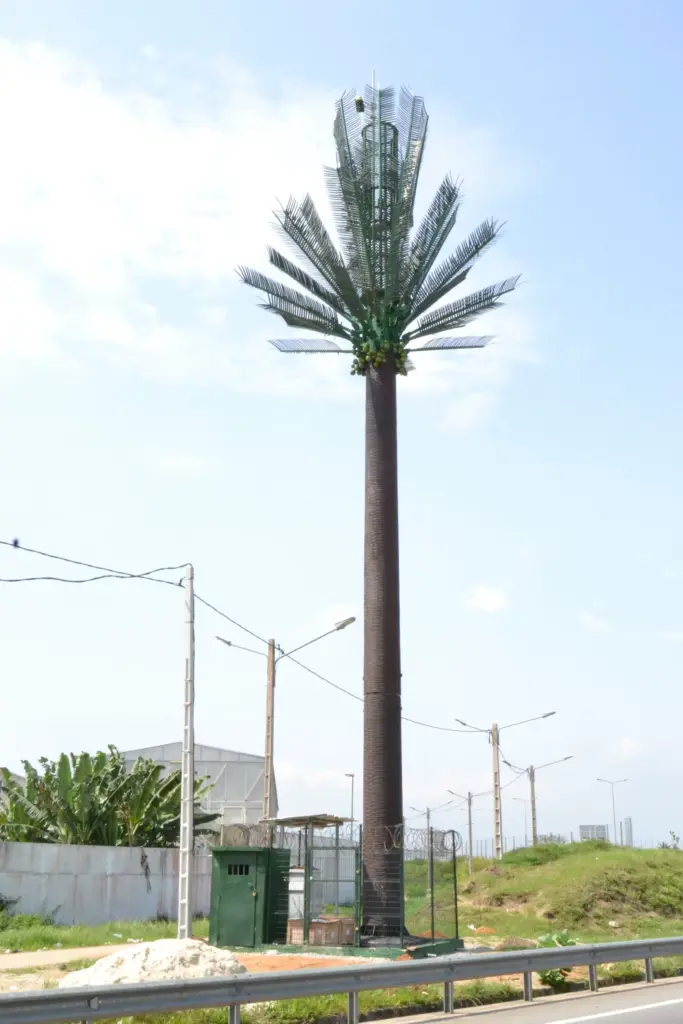
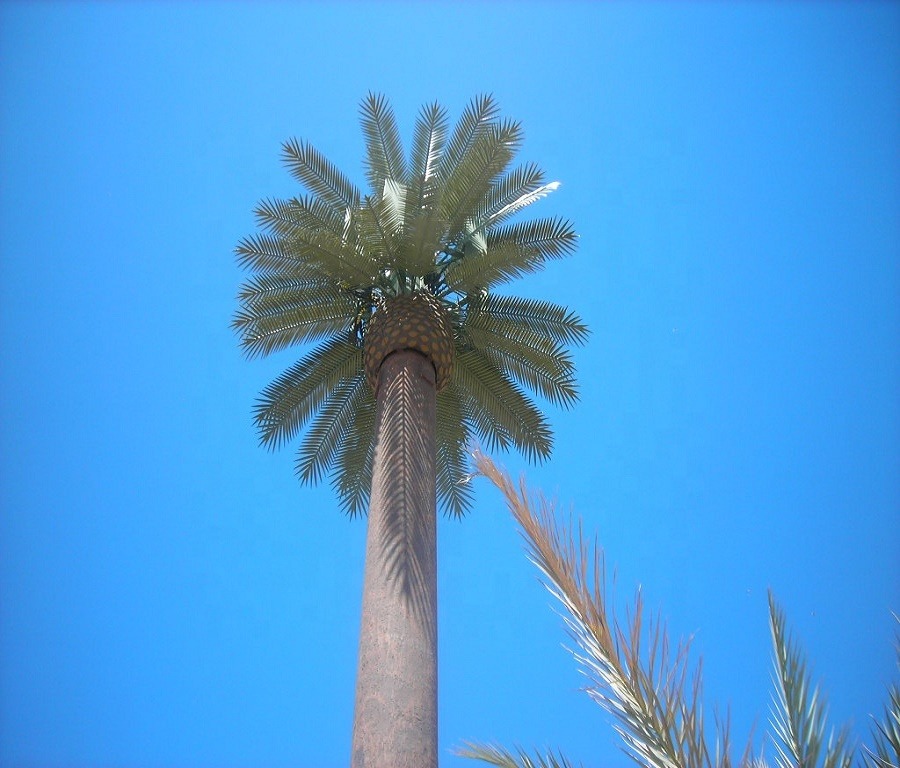
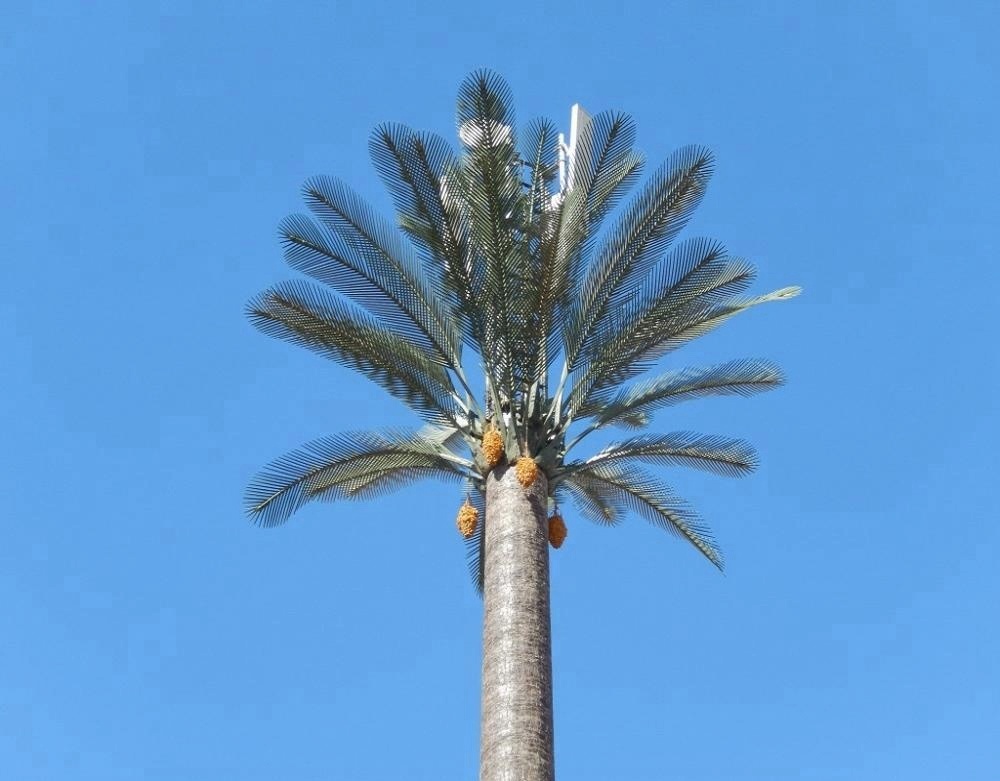
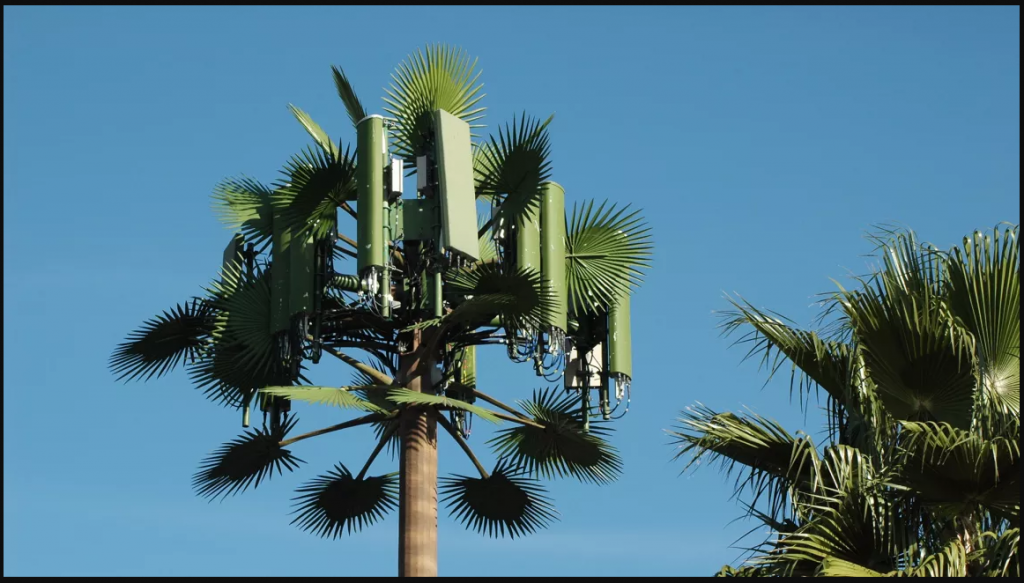
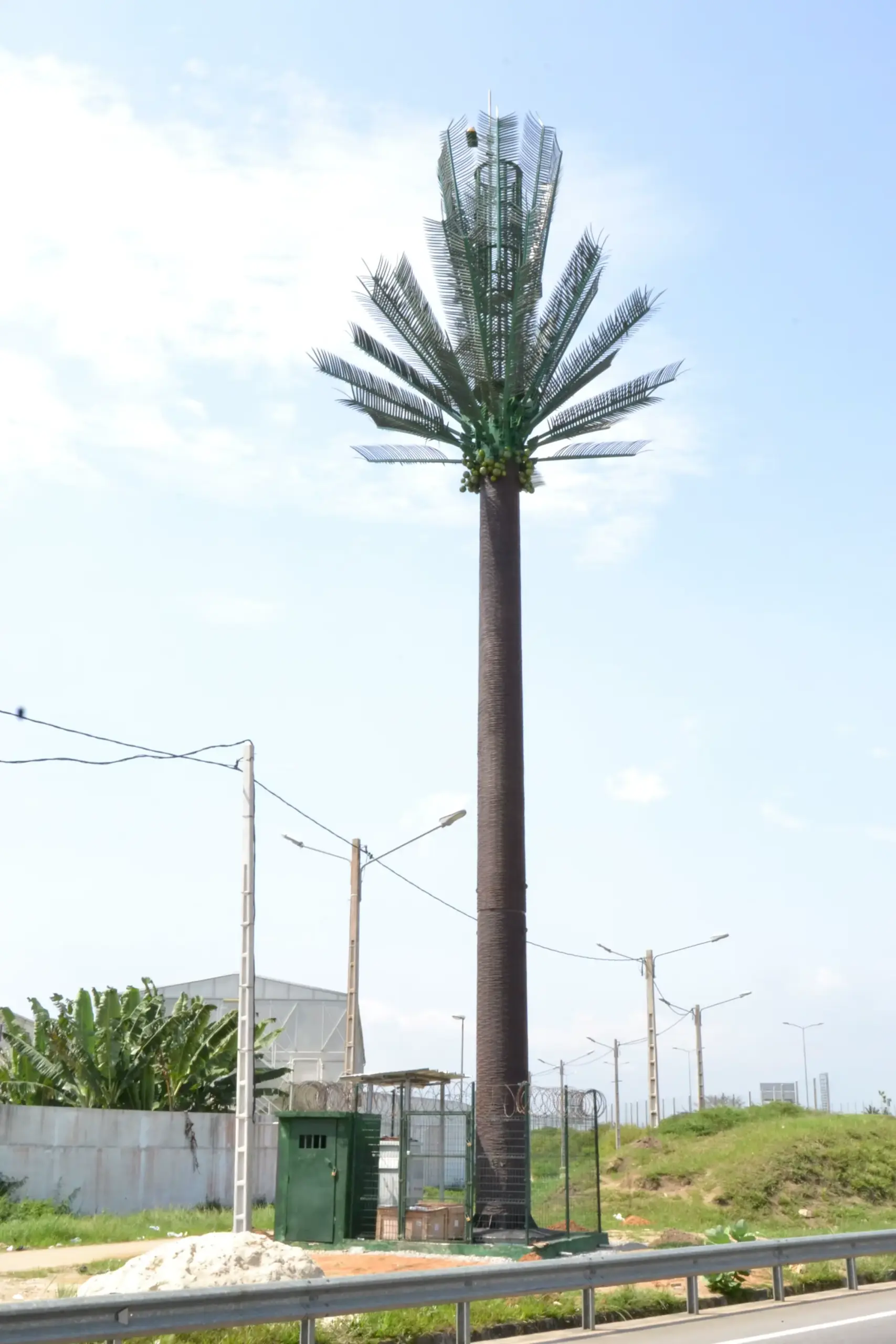
Designed specifically for tropical and coastal zones (southern Florida, Caribbean, SE Asia, Arabian Gulf), the Bionic Palm Cell Tower incorporates palm frond geometry with wind‑adaptive flexibility. The fronds are fabricated from carbon‑fiber reinforced polymer (CFRP) with a modulus of 89 GPa, allowing them to sway and shed wind loads while housing small‑cell antennas or Wi‑Fi access points inside the frond stems. Concealment details are remarkable: artificial palm trunk texture is cast from actual palm bark molds, and the frond attachment uses a ball‑joint mechanism that mimics natural movement. Wind resistance is the highlight: through extensive boundary layer wind tunnel testing, our 25m palm tower shows drag coefficient Cd = 0.48 versus 0.93 for an equivalent monopole. Environmental adaptability includes protection against termites, fungal growth, and UV radiation (tested to ISO 4892-2). Additionally, the palm design integrates a hidden rainwater drainage channel inside the trunk, preventing corrosion and allowing internal cabling. For coastal highways and beachfront resorts, these disguised palm towers have reduced permitting time by 60% because visual impact assessments consistently return “negligible” ratings.
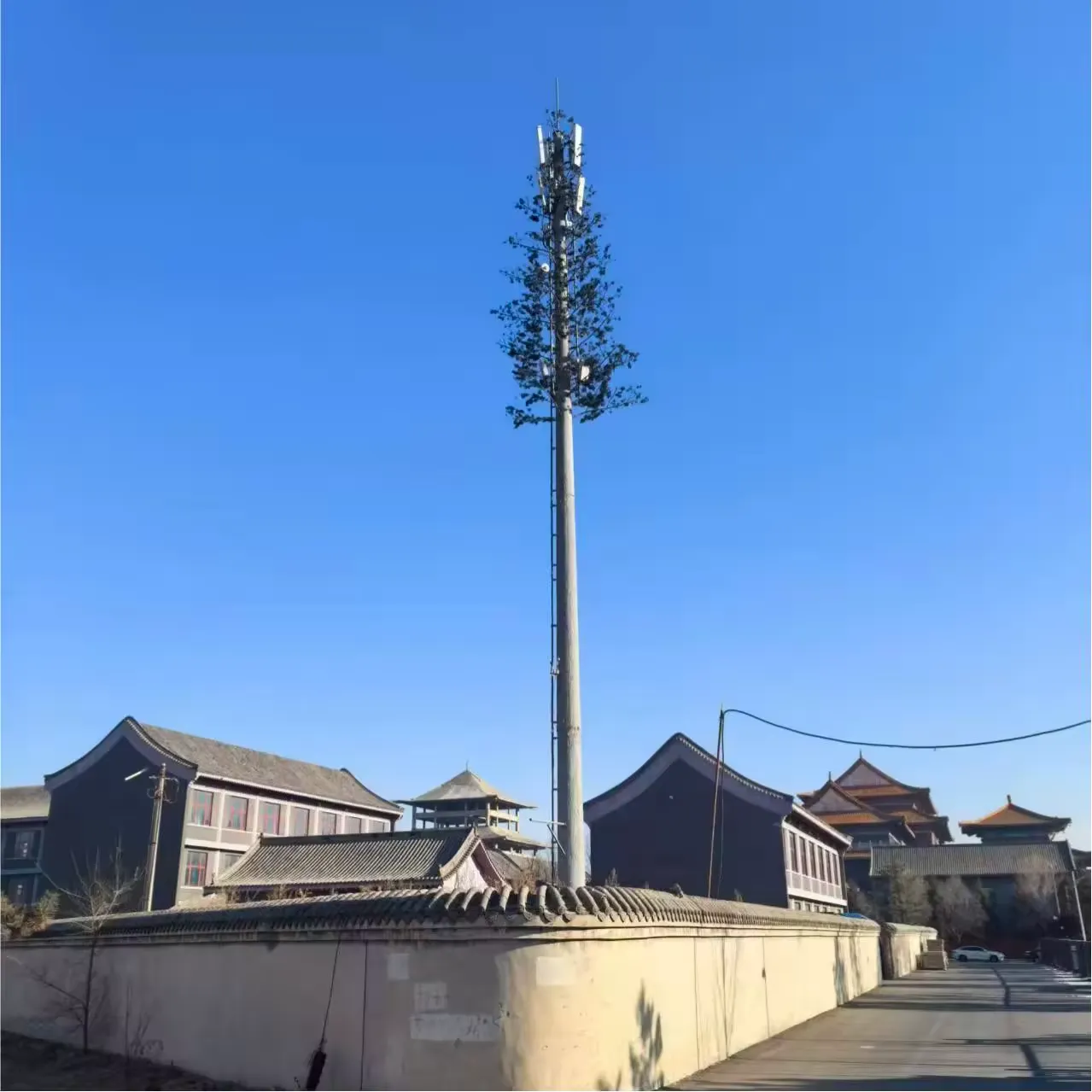
2.4 Artificial Tree Communication Tower – Full Customization Freedom
When project landscapes demand unique species or exact size replication, our Artificial Tree Communication Tower platform offers total geometric freedom. Using parametric 3D modeling, we can generate any tree shape with height from 12m to 55m and canopy diameter up to 18m. Customization extends to trunk curvature, branch orientation, and even seasonal color‑changing foliage (thermochromic leaf sets). Signal transmission is never compromised: the internal structure accommodates up to 12 antennas on concealed mounting rings, and all materials are RF‑transparent (dielectric constant < 2.5) except for the load‑bearing steel which is placed outside the near‑field radiation zone. Equipment compatibility covers all major OEMs (Ericsson, Nokia, Huawei, Samsung) with pre‑drilled interfaces and hybrid power cabling pathways. Maintenance advantages: the modular skin panels can be individually replaced without tower climbing – a davit system lowers panels to ground level. Service life is rated at 40+ years for the steel core and 20 years for the synthetic bark, with a 10‑year comprehensive warranty. For procurement engineers, this means lower total cost of ownership compared to repainting conventional towers every 7‑10 years.
III. Core Product Technical Strengths
3.1 High-Strength Steel & Mechanical Performance
The primary structural skeleton uses S460ML (yield strength 460 MPa, Charpy V-notch impact 50J @ -40°C) for cold climates, and duplex stainless steel 1.4462 for marine environments. Finite element analysis (FEA) under worst-case ice and wind loads shows deflection limits of H/100 (where H is tower height). The typical safety factor against ultimate limit state is 1.8, exceeding TIA-222-H requirements by 18%.
Drag reduction via fractal branching: Fdrag,bionic = Cd,eff · (0.5·ρ·V2·Aproj) where Cd,eff = 0.52 ~ 0.68 (vs. 1.1 for lattice towers).
Furthermore, the trunk’s variable stiffness reduces resonant amplification. Procurement engineers can request detailed S-N fatigue curves for each product series, ensuring reliability in high‑wind regions.
3.2 Bionic Camouflage Technology & Simulation Metrics
Using multispectral camouflage, our artificial bark and leaves are designed to be visually identical to real trees in RGB, near-infrared (for drone inspection), and even thermal imaging (low thermal conductivity layers mask internal heat). The simulation effect is quantified by the Structural Similarity Index (SSIM) >0.94 compared to reference tree species. Our proprietary 3D texturing includes lenticels, bark fissures, and epiphytic moss patches, making the tower indistinguishable in both winter and summer after optional leaf attachment kits.
3.3 Weather, Corrosion & Wind Resistance Performance
Accelerated salt spray testing (ASTM B117) exceeds 3000 hours without red rust. The combination of galvanization (minimum 120µm) + epoxy primer + polyurethane topcoat gives a total system durability ranking of C5-M (very high marine corrosivity). Wind resistance design follows ASCE 7-22 with three-second gust speeds up to 60 m/s (216 km/h). Each palm tower includes internal tuned mass damper (TMD) for vortex-induced vibration suppression.
3.4 Signal Transmission Stability & Equipment Compatibility
The bionic envelope exhibits negligible insertion loss (<0.25 dB for 700MHz–3.8GHz). Internal equipment racks are pre-configured for RRU and BBU with active cooling (airflow simulation ensures delta T < 10°C). All tower models support hybrid fiber + power distribution, and the trunk interior maintains IP65 rating for sensitive electronics.
3.5 Environmental & Landscape Integration
Beyond aesthetics, these towers contribute to urban biodiversity: optional artificial nesting cavities for birds and insect hotels. Life‑cycle assessment (LCA) shows 42% lower carbon footprint than conventional steel lattice towers over 30 years due to reduced maintenance and extended repaint intervals. Moreover, landscape integration is often a prerequisite for permits in UNESCO buffer zones or nature reserves – our products have consistently satisfied ICOMOS guidelines.
| Parameter | Camouflage Tree Tower (30m) | Bionic Palm Tower (18m) | Artificial Custom Tower (40m) |
|---|---|---|---|
| Max antenna payload (kg) | 1850 | 950 | 2600 |
| Wind resistance (3s gust) | 165 km/h | 195 km/h | 180 km/h |
| Design life (years) | 40 | 45 | 50 |
| Corrosion class | C4 | C5-M | C5 |
| Visual blending distance (m) | < 35 | < 25 | < 30 |
IV. Product Customization Services
Understanding that each site presents unique constraints – from zoning board aesthetics to structural loads – we offer tiered customization. For appearance, clients can select any tree species (including regional endemics), specific height increments of 0.5m, and bark color palettes matched to surrounding flora. Performance customization includes adjusting the antenna mounting capacity (up to 3000 kg), altering the wind resistance class (Exposure B, C, or D per ASCE), and fine‑tuning the resonance frequency to avoid soil-structure interaction. Site‑specific adaptive design solutions are our hallmark: we incorporate geotechnical reports to tailor foundation systems (micro-piles, raft, or pile cap) and can integrate additional stealth features like FAA lighting disguised as fireflies or bird perches. Our engineering team provides preliminary CAD models within 5 business days, and full structural calculation reports (including seismic compatibility) within 15 days.
V. Typical Application Fields
Urban residential and landscape areas benefit from our towers by eliminating NIMBY opposition – case studies show a 75% reduction in public hearings rejection. Coastal and tropical tourist attractions (from Maldives to Miami Beach) deploy our palm towers because they preserve the holiday experience. Suburban parks, scenic spots, and ecological reserves mandate our bionic trees as the only permissible tall structures under environmental impact regulations. Furthermore, highways, airports, and infrastructure surroundings use artificial tree towers for V2X communication nodes and air‑ground connectivity without adding visual clutter. Our products are also ideal for smart city sensor networks, camouflaging air quality monitors and public Wi‑Fi into streetscape trees.
VI. Production, Quality Control & After‑Sales Service
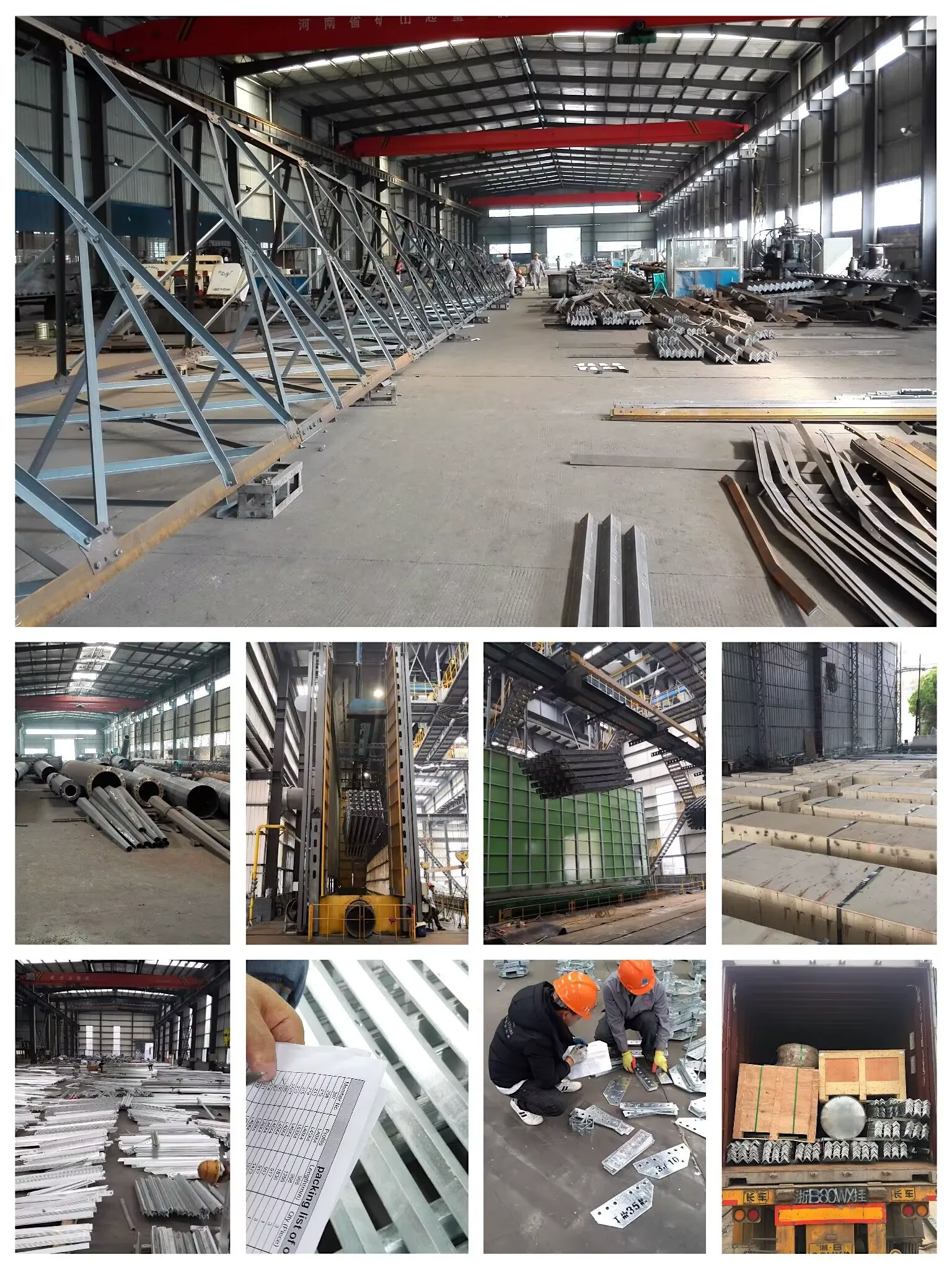
Manufacturing occurs in our 45,000 m² smart factory with robotic welding cells and automated bark injection molding. Quality inspection system includes 100% ultrasonic testing on main welds, dimensional laser scanning, and camouflage pattern validation via colorimetry. Each tower is pre‑assembled at factory to verify fitment. Installation guidance: we provide step‑by-step video manuals, on‑site technical supervision (optional), and BIM models for clash detection. Later maintenance includes biannual inspection checklists, a spare parts depot with 48‑hour global dispatch, and a 10‑year product warranty against structural defects and bark delamination. For procurement engineers, we offer extended service agreements covering lightning protection system validation and dielectric testing every 5 years.
VII. Product Case Display
7.1 Urban Bionic Tree Tower – Singapore North-South Corridor
Four 35m bionic rain trees were installed along a highway corridor, each supporting 5G massive MIMO arrays. Post-installation surveys indicated 92% of residents could not identify the towers as telecom structures. The project received the “Landscape Excellence Award” 2024.
7.2 Coastal Disguised Palm Tower – Miami Beach, Florida
Twelve palm towers replaced conventional monopoles along Ocean Drive. Despite Category 2 hurricane (winds 165 km/h) in 2025, all structures remained fully functional with no visible damage; the RF performance improved by 15% due to optimized shroud design. The city expanded the contract for 30 additional units.
7.3 Custom Artificial Tree Tower – German Black Forest Nature Park
A 28m spruce‑simulation tower was designed to mimic local spruce morphology, with synthetic branches that shed snow loads automatically (heating elements in limbs). The project enabled mobile coverage in a previously dead zone while preserving UNESCO Biosphere Reserve status. Procurement engineers praised the detailed documentation and load verification.
For access to full case study PDFs and reference site visits, contact our technical sales team. We maintain a strict policy of transparent performance data – every claim is backed by third‑party testing reports from TÜV SÜD and Fraunhofer Institute.
For technical datasheets, custom price estimation, and procurement assistance, contact our engineering support team. All products comply with ETSI, IEC, and local building codes. We provide full certification packages including foundation calculations and installation manuals.