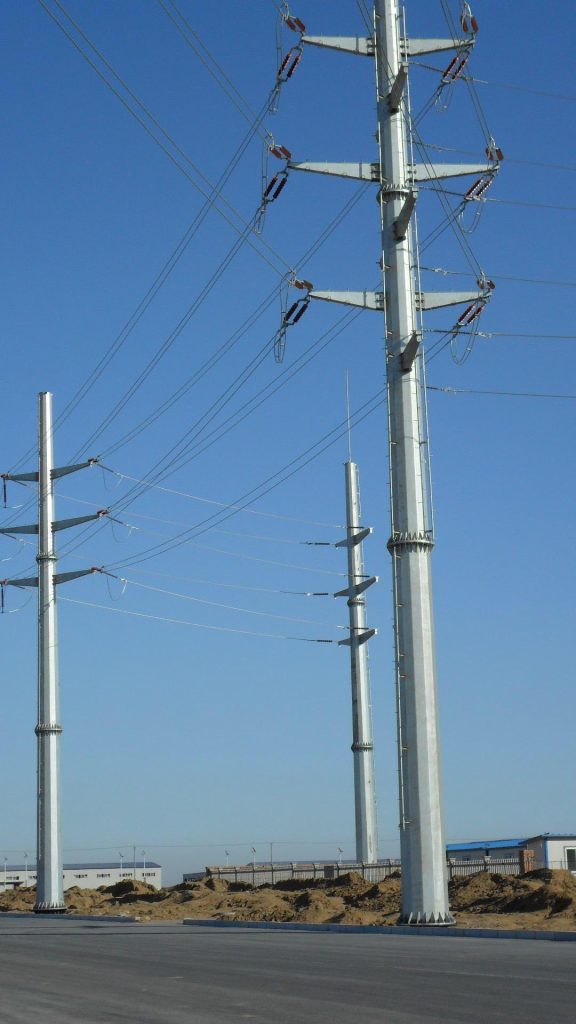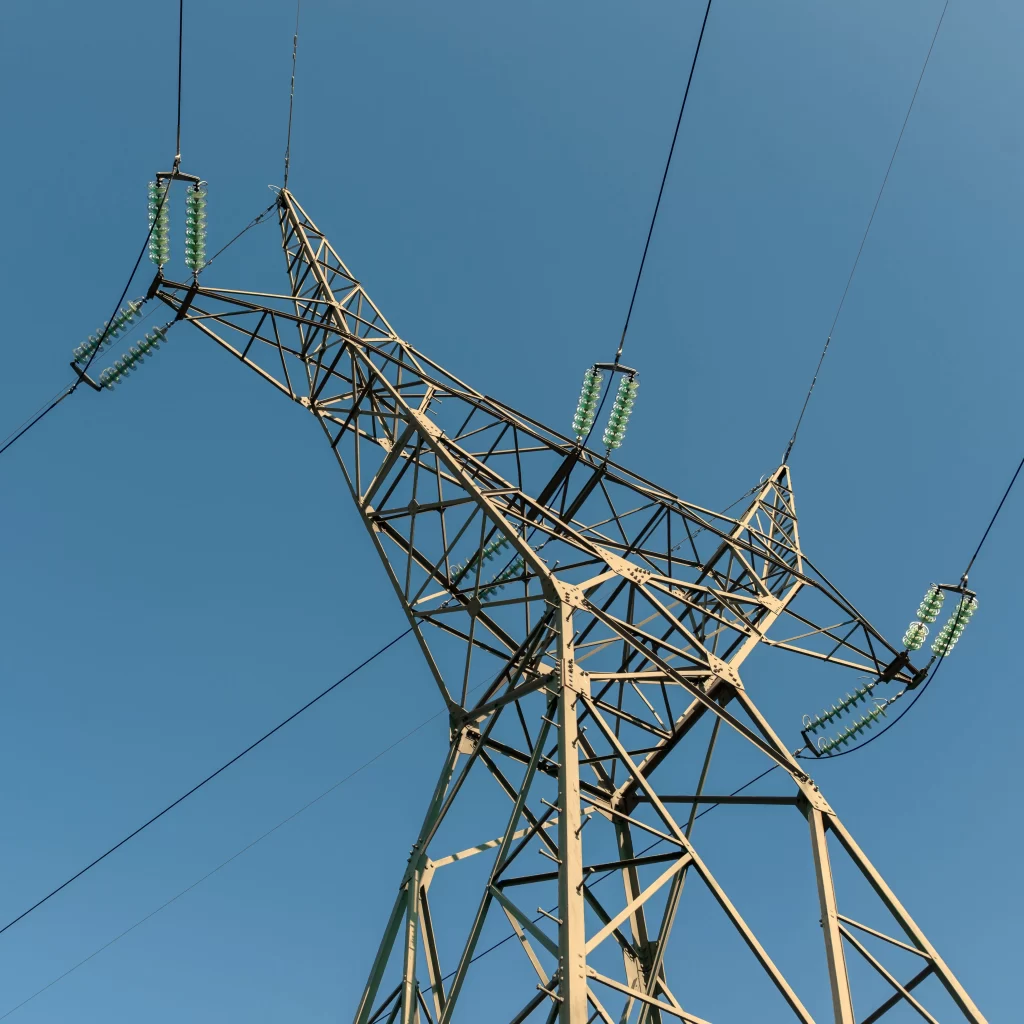
500kV Transmission Line Pole-Tower Under Lightning Impulse Full Wave
Tower Steel Structure Rust Detection Technology
January 14, 2026
Study on Electromagnetic Transient Characteristics of 500kV Transmission Line Pole-Tower Under Lightning Impulse Full Wave
Abstract: As the core component of 500kV high-voltage transmission lines, pole-towers bear the dual functions of supporting conductors and grounding. Lightning strikes are one of the main threats to the safe and stable operation of transmission lines, and the electromagnetic transient response of pole-towers under lightning impulse full waves directly affects the insulation coordination and lightning protection design of the entire power system. In this paper, a comprehensive study on the electromagnetic transient characteristics of 500kV transmission line pole-towers under lightning impulse full wave is carried out by combining theoretical analysis, finite element simulation, and experimental testing. First, the theoretical basis of electromagnetic transients under lightning impulse is elaborated, including the characteristics of lightning impulse full waves, the electromagnetic field distribution law, and the transient response mechanism of pole-tower structures. Then, a three-dimensional finite element model of a 500kV angle steel pole-tower is established using ANSYS Maxwell software, and the lightning impulse full wave (1.2/50μs) is applied to simulate the electromagnetic transient process of the pole-tower. The distribution characteristics of transient voltage, transient current, and transient electromagnetic field of the pole-tower under different lightning strike positions (top of the tower, cross arm, and conductor) and different grounding resistance values are analyzed. Meanwhile, a reduced-scale experimental model of the pole-tower is built based on the similarity principle, and lightning impulse full wave tests are carried out to verify the correctness of the simulation results. The results show that: (1) The lightning strike position has a significant impact on the electromagnetic transient response of the pole-tower. The transient voltage and current at the top of the tower are the largest when lightning strikes the top of the tower, and the electromagnetic field intensity near the cross arm is the highest when lightning strikes the cross arm. (2) With the increase of grounding resistance, the transient voltage at each part of the pole-tower increases significantly, and the attenuation rate of transient current decreases, which increases the risk of insulation flashover. (3) The transient electromagnetic field around the pole-tower decays exponentially with the increase of distance, and the electromagnetic field intensity at the same distance is the largest in the direction of the lightning strike. (4) The simulation results are in good agreement with the experimental results, with an error of less than 8%, which verifies the reliability of the established finite element model. This study provides a theoretical basis and technical support for the optimization of lightning protection design, insulation coordination, and safe operation of 500kV transmission line pole-towers.
Keywords: 500kV transmission line; pole-tower; lightning impulse full wave; electromagnetic transient; finite element simulation; experimental verification
1. Introduction
1.1 Research Background and Significance
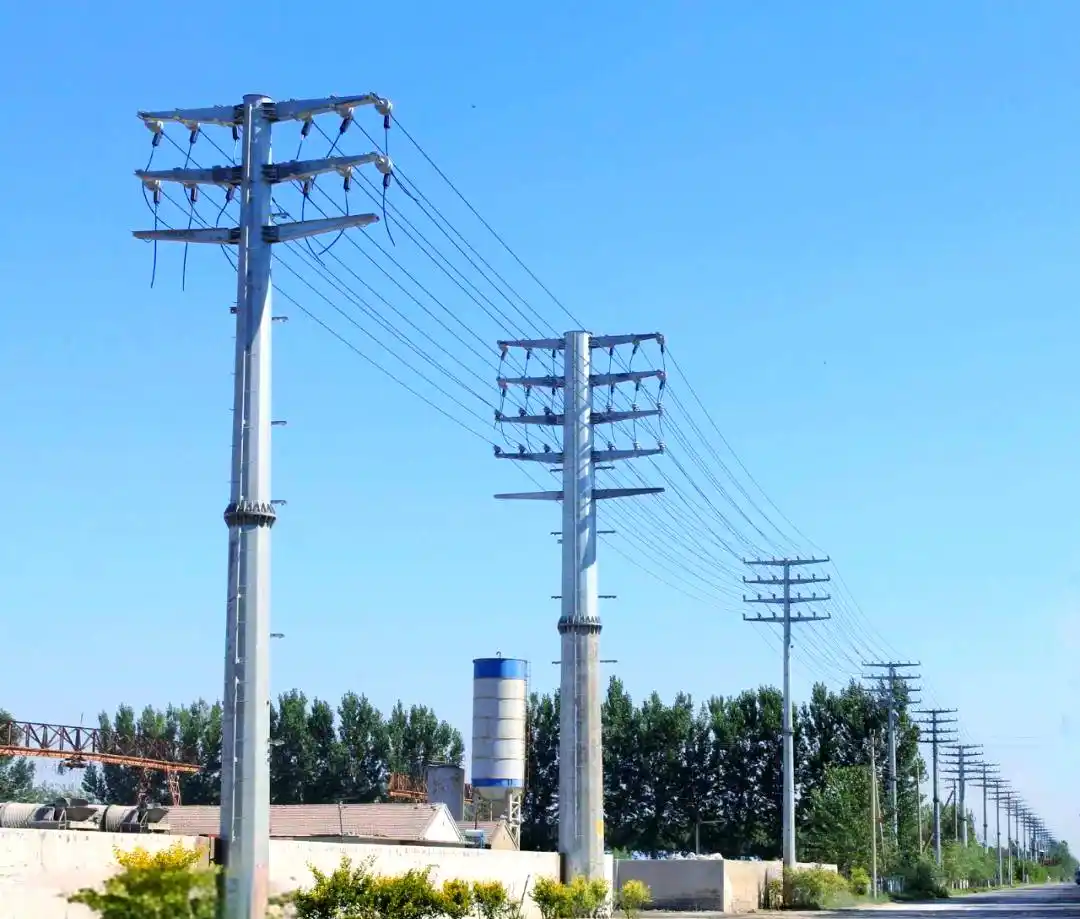
With the rapid development of the power industry, 500kV high-voltage transmission lines have become an important part of the national power grid, undertaking the important task of long-distance and large-capacity power transmission. The safe and stable operation of 500kV transmission lines is directly related to the reliability of the entire power system and the normal operation of social production and life. However, lightning strikes are one of the most important natural disasters threatening the safe operation of transmission lines. According to statistics, lightning-caused faults account for more than 40% of the total faults of high-voltage transmission lines, and in some lightning-prone areas, this proportion can even reach more than 60% [1]. When a lightning strike occurs on a transmission line or pole-tower, a strong lightning impulse full wave will be generated, which will induce complex electromagnetic transient phenomena in the pole-tower structure. These transient phenomena will cause overvoltage and overcurrent in the pole-tower and its attached equipment, which may lead to insulation flashover, equipment damage, and even power outages, resulting in huge economic losses and social impacts [2-3].
As the key supporting and grounding component of the transmission line, the pole-tower’s electromagnetic transient response under lightning impulse full wave is the core issue of the lightning protection design of the transmission line. The pole-tower is usually made of angle steel, steel pipe, or concrete, and its structure is complex, involving multiple components such as the tower body, cross arm, insulator string, and grounding device. When lightning strikes, the electromagnetic transient process of the pole-tower is affected by many factors, such as the lightning strike position, lightning current parameters, grounding resistance, and pole-tower structure [4]. Therefore, in-depth study of the electromagnetic transient characteristics of 500kV pole-towers under lightning impulse full wave, mastering the distribution law of transient voltage, current, and electromagnetic field, and clarifying the influence of various factors on the transient response are of great significance for optimizing the lightning protection design of pole-towers, improving the insulation coordination level of the power system, and ensuring the safe and stable operation of 500kV transmission lines.
In recent years, with the continuous improvement of computer simulation technology and experimental testing technology, the research on the electromagnetic transient characteristics of power equipment under lightning impulse has made great progress. However, due to the complex structure of 500kV pole-towers and the strong randomness of lightning strikes, there are still many problems to be solved in the research on the electromagnetic transient characteristics of pole-towers: (1) The existing research mostly focuses on the lightning protection performance of the entire transmission line, and the research on the electromagnetic transient response of the pole-tower itself is not in-depth enough; (2) The influence of different lightning strike positions and grounding resistance values on the electromagnetic transient characteristics of the pole-tower has not been systematically studied; (3) The accuracy of the simulation model needs to be verified by more reliable experimental data. Therefore, it is necessary to carry out a comprehensive and in-depth study on the electromagnetic transient characteristics of 500kV transmission line pole-towers under lightning impulse full wave.
1.2 Research Status at Home and Abroad
Foreign scholars have carried out a lot of research on the lightning protection of transmission lines and the electromagnetic transient characteristics of pole-towers earlier. In the 1970s, scholars such as Wagner first proposed the traveling wave theory of lightning overvoltage, which laid a theoretical foundation for the study of electromagnetic transients of pole-towers [5]. With the development of computer technology, finite element simulation methods have been widely used in the study of electromagnetic transients of pole-towers. For example, D’Alessandro et al. established a two-dimensional finite element model of a transmission line pole-tower using COMSOL Multiphysics software, simulated the electromagnetic transient process under lightning impulse, and analyzed the distribution law of transient voltage and current [6]. Petrache et al. studied the influence of lightning current parameters on the electromagnetic transient response of pole-towers through simulation and experiment, and proposed an optimization scheme for the lightning protection design of pole-towers [7]. In addition, foreign scholars have also carried out a lot of research on the grounding performance of pole-towers under lightning impulse, and studied the influence of grounding resistance and grounding grid structure on the transient response [8-9].
Domestic research on the electromagnetic transient characteristics of 500kV transmission line pole-towers under lightning impulse has developed rapidly in recent years. Many universities and research institutions have carried out in-depth research in this field. For example, Wang et al. established a three-dimensional finite element model of a 500kV angle steel pole-tower using ANSYS software, simulated the lightning impulse transient process, and analyzed the distribution of transient electromagnetic field around the pole-tower [10]. Li et al. built a reduced-scale experimental model of a pole-tower, carried out lightning impulse full wave tests, and studied the transient voltage response characteristics of the pole-tower under different lightning strike positions [11]. Zhang et al. studied the influence of grounding resistance on the electromagnetic transient response of 500kV pole-towers through simulation and experiment, and proposed a method to reduce the grounding resistance to improve the lightning protection performance [12]. However, there are still some deficiencies in the existing domestic research: (1) The simulation model is not detailed enough, and the influence of some fine structures of the pole-tower (such as the connection between angle steels and the insulator string) on the transient response is not considered; (2) The systematicness of the experimental research is not strong, and the verification of the simulation model is not comprehensive; (3) The research on the electromagnetic transient coupling mechanism between the pole-tower and the conductor is not in-depth enough.
1.3 Research Objectives and Scope
The main objectives of this paper are: (1) To elaborate the theoretical basis of the electromagnetic transient characteristics of 500kV transmission line pole-towers under lightning impulse full wave, including the characteristics of lightning impulse full waves, the electromagnetic field distribution law, and the transient response mechanism; (2) To establish a high-precision three-dimensional finite element model of a 500kV angle steel pole-tower, and simulate the electromagnetic transient process under lightning impulse full wave; (3) To analyze the distribution characteristics of transient voltage, transient current, and transient electromagnetic field of the pole-tower under different influencing factors (lightning strike position, grounding resistance); (4) To build a reduced-scale experimental model of the pole-tower, carry out lightning impulse full wave tests, and verify the correctness of the simulation model; (5) To put forward optimization suggestions for the lightning protection design of 500kV transmission line pole-towers based on the research results.
The research scope of this paper includes: (1) The 500kV angle steel pole-tower commonly used in engineering; (2) The lightning impulse full wave with parameters of 1.2/50μs (front time/half-peak time) which is in line with the IEC standard; (3) Three typical lightning strike positions: top of the tower, cross arm, and conductor; (4) Four typical grounding resistance values: 5Ω, 10Ω, 15Ω, and 20Ω; (5) The electromagnetic transient characteristics of the pole-tower, including transient voltage, transient current, and transient electromagnetic field distribution.
1.4 Structure of the Thesis
This paper is divided into six chapters. Chapter 1 is the introduction, which elaborates on the research background and significance, summarizes the research status at home and abroad, clarifies the research objectives and scope, and introduces the structure of the thesis. Chapter 2 introduces the theoretical basis of electromagnetic transients under lightning impulse, including the characteristics of lightning impulse full waves, the basic theory of electromagnetic transients, and the transient response mechanism of pole-tower structures. Chapter 3 describes the establishment of the finite element simulation model of the 500kV pole-tower, including the model simplification, material parameters, boundary conditions, and loading of lightning impulse full waves. Chapter 4 analyzes the simulation results of the electromagnetic transient characteristics of the pole-tower under different influencing factors. Chapter 5 introduces the design and implementation of the reduced-scale experimental model, and verifies the simulation results through experimental tests. Chapter 6 is the conclusion and prospect, which summarizes the main research results, puts forward optimization suggestions for the lightning protection design of 500kV pole-towers, and looks forward to the future research direction.
2. Theoretical Basis of Electromagnetic Transients Under Lightning Impulse
2.1 Characteristics of Lightning Impulse Full Wave
Lightning impulse is a kind of transient overvoltage with short duration and high amplitude. The lightning impulse full wave is usually defined by two parameters: front time (T1) and half-peak time (T2). According to the IEC 60060-1 standard, the standard lightning impulse full wave has a front time of 1.2μs (tolerance ±30%) and a half-peak time of 50μs (tolerance ±20%), which is recorded as 1.2/50μs [13]. The waveform of the standard lightning impulse full wave is shown in Figure 1.
The mathematical expression of the standard lightning impulse full wave can be described by the double exponential function [14]:
$$u(t) = U_m \left( e^{-t/\tau_2} – e^{-t/\tau_1} \right)$$
Where: \( U_m \) is the peak value of the lightning impulse voltage; \( \tau_1 \) is the front time constant, which determines the steepness of the wave front; \( \tau_2 \) is the tail time constant, which determines the duration of the wave tail; \( t \) is the time.
The peak value of the lightning impulse voltage generated by natural lightning can reach hundreds of kilovolts to millions of kilovolts, and the peak value of the lightning current can reach tens of kiloamperes to hundreds of kiloamperes. For 500kV transmission lines, the lightning impulse voltage level is usually 1425kV, which is determined according to the insulation coordination requirements of the power system [15]. When a lightning strike occurs, the lightning impulse full wave will be injected into the pole-tower through the strike point, and then spread along the tower body to the ground, inducing complex electromagnetic transient phenomena.
In addition to the standard 1.2/50μs full wave, there are also steep-front lightning impulses and long-tail lightning impulses in nature. The steep-front lightning impulse has a shorter front time (less than 1μs) and a higher wave front steepness, which has a greater impact on the insulation of the pole-tower. The long-tail lightning impulse has a longer half-peak time (more than 50μs), which may cause cumulative damage to the equipment. However, the standard 1.2/50μs lightning impulse full wave is the most representative, so this paper focuses on the electromagnetic transient characteristics of the pole-tower under this waveform.
2.2 Basic Theory of Electromagnetic Transients
The electromagnetic transient process of the pole-tower under lightning impulse is a complex electromagnetic field coupling problem, which follows the Maxwell’s equations [16]. Maxwell’s equations are the fundamental equations describing the electromagnetic field, including the Gauss’s law for electricity, Gauss’s law for magnetism, Faraday’s law of electromagnetic induction, and Ampère-Maxwell law. The differential form of Maxwell’s equations is as follows:
$$\nabla \cdot \vec{D} = \rho_v$$
$$\nabla \cdot \vec{B} = 0$$
$$\nabla \times \vec{E} = -\frac{\partial \vec{B}}{\partial t}$$
$$\nabla \times \vec{H} = \vec{J} + \frac{\partial \vec{D}}{\partial t}$$
Where: \( \vec{D} \) is the electric displacement vector; \( \rho_v \) is the volume charge density; \( \vec{B} \) is the magnetic induction intensity; \( \vec{E} \) is the electric field intensity; \( \vec{H} \) is the magnetic field intensity; \( \vec{J} \) is the current density; \( t \) is the time.
In the electromagnetic transient analysis of the pole-tower, the pole-tower structure is usually considered as a conductor, and the surrounding medium is air. The constitutive relations of the conductor and air are as follows:
$$\vec{D} = \varepsilon \vec{E}$$
$$\vec{B} = \mu \vec{H}$$
$$\vec{J} = \sigma \vec{E}$$
Where: \( \varepsilon \) is the permittivity; \( \mu \) is the permeability; \( \sigma \) is the conductivity.
When the lightning impulse full wave is injected into the pole-tower, a time-varying current will be generated in the tower body, which will excite a time-varying electromagnetic field around the pole-tower. The time-varying electromagnetic field will induce eddy currents in the conductor of the pole-tower, and there will be electromagnetic coupling between the tower body, cross arm, insulator string, and conductor. The electromagnetic transient response of the pole-tower is the result of the interaction between the injected lightning impulse, the electromagnetic field, and the pole-tower structure.
2.3 Transient Response Mechanism of Pole-Tower Structure
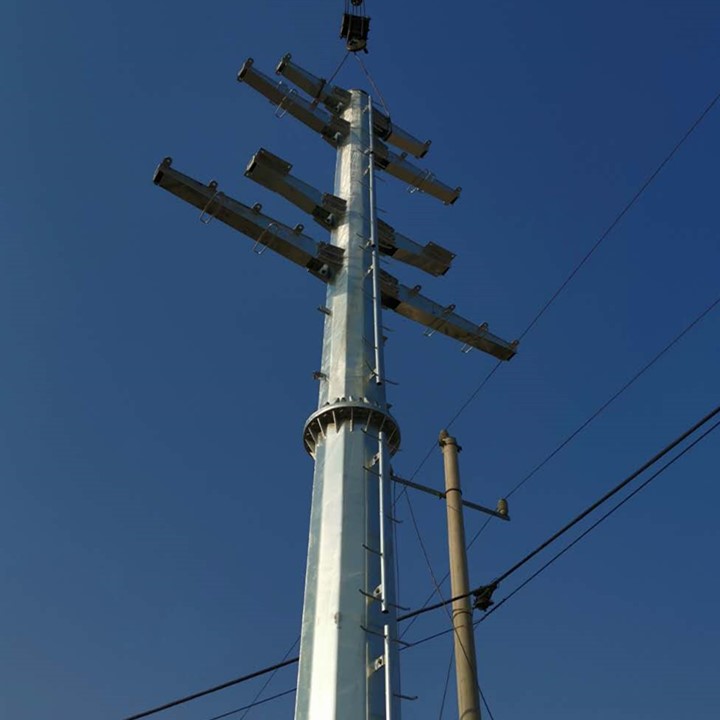
The pole-tower structure is a complex spatial truss structure composed of multiple angle steels connected by bolts. When lightning strikes the pole-tower, the transient response mechanism of the pole-tower mainly includes the following aspects:
(1) Voltage and current distribution mechanism: The lightning impulse voltage injected from the strike point will be distributed along the tower body. Due to the distributed capacitance and inductance of the tower body, the voltage and current will have a traveling wave effect during the propagation process. The wave impedance of the tower body is an important parameter affecting the voltage and current distribution. The wave impedance of the angle steel pole-tower is usually between 100Ω and 300Ω, which is related to the cross-sectional area of the tower body, the spacing between angle steels, and the height of the tower [17].
(2) Electromagnetic field coupling mechanism: The time-varying current in the tower body will generate a time-varying electromagnetic field around the pole-tower. The electromagnetic field will induce voltage and current in the adjacent conductors and metal components, which is the electromagnetic induction effect. At the same time, the electromagnetic field will also interact with the grounding device of the pole-tower, affecting the grounding current and grounding voltage [18].
(3) Insulation response mechanism: The insulator string between the pole-tower and the conductor is an important insulation component. Under the action of lightning impulse overvoltage, the insulator string will bear a high transient voltage. If the transient voltage exceeds the insulation strength of the insulator string, insulation flashover will occur, leading to a short circuit between the conductor and the pole-tower [19].
(4) Grounding response mechanism: The grounding device of the pole-tower is used to guide the lightning current into the ground and reduce the grounding voltage. Under the action of lightning impulse, the grounding resistance of the grounding device will show transient characteristics. Due to the skin effect and the ionization of the soil, the transient grounding resistance is usually smaller than the steady-state grounding resistance, but the change law is complex [20]. The grounding response directly affects the attenuation rate of the lightning current and the distribution of the transient voltage on the pole-tower.
In summary, the electromagnetic transient response of the pole-tower under lightning impulse is a comprehensive result of multiple mechanisms such as voltage and current distribution, electromagnetic field coupling, insulation response, and grounding response. To accurately analyze the electromagnetic transient characteristics of the pole-tower, it is necessary to comprehensively consider these mechanisms and establish a reasonable mathematical model and simulation model.
3. Establishment of Finite Element Simulation Model for 500kV Pole-Tower
3.1 Model Simplification and Geometric Modeling
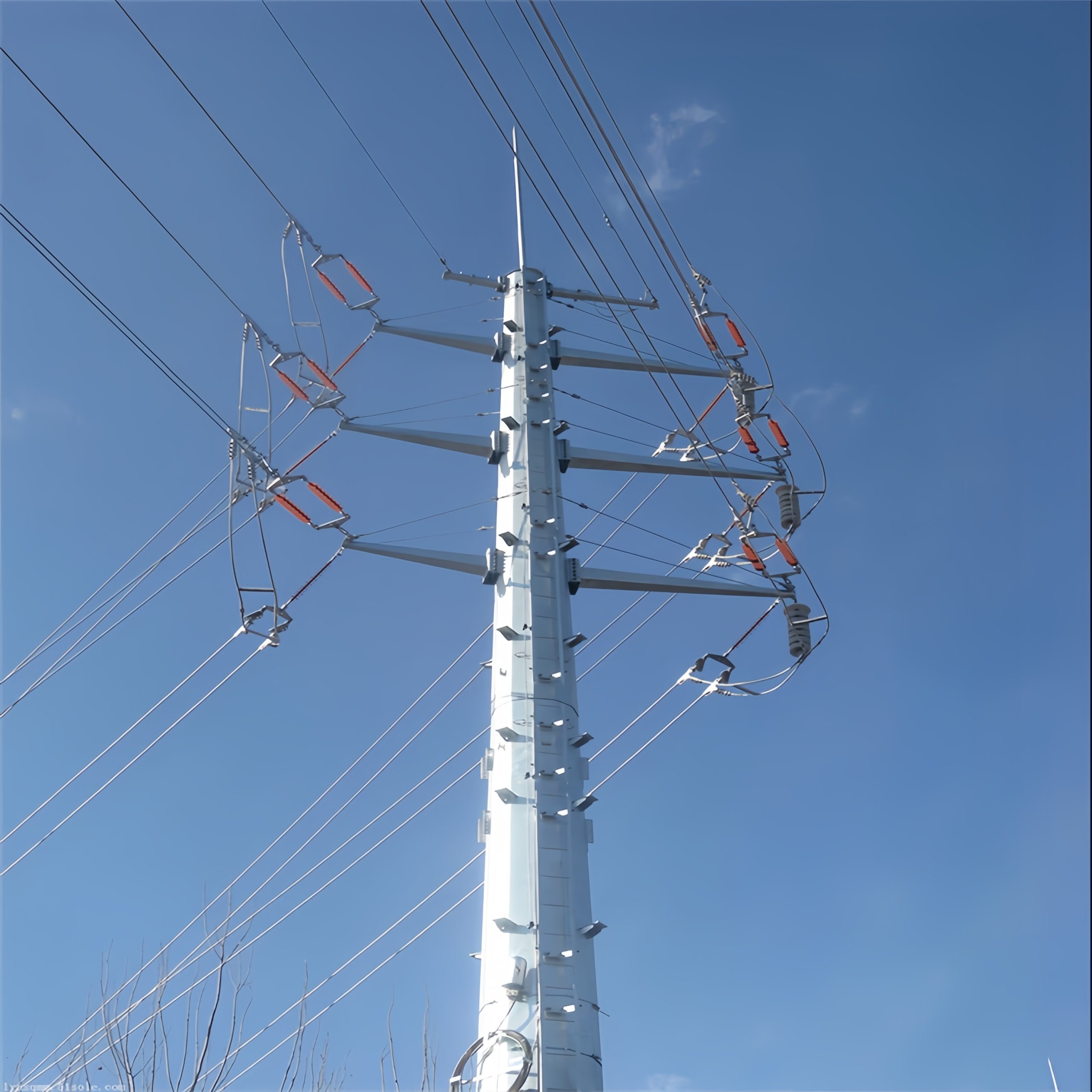
The 500kV angle steel pole-tower studied in this paper is a typical猫头-type tower, with a total height of 45m, a base width of 8m, and a cross arm length of 12m. The tower body is composed of Q355 angle steels, with different cross-sectional sizes at different heights. The cross arm is also composed of Q355 angle steels, and the insulator string is made of glass fiber reinforced plastic. Due to the complex structure of the pole-tower, it is necessary to simplify the model during the finite element modeling process to improve the calculation efficiency on the premise of ensuring the calculation accuracy.
The main simplification measures are as follows: (1) Ignore the bolt connections between the angle steels, and assume that the connections are rigid; (2) Simplify the insulator string as a cylindrical insulator with the same equivalent diameter and length; (3) Ignore the small components such as the tower foot plate and the cable clamp, which have little impact on the electromagnetic transient response; (4) The grounding device is simplified as a horizontal grounding grid with a length of 20m, a width of 20m, and a burial depth of 0.8m, and the grounding conductor is a round steel with a diameter of 12mm.
Based on the above simplification measures, the three-dimensional geometric model of the 500kV pole-tower is established using ANSYS DesignModeler software. The geometric model includes the tower body, cross arm, insulator string, conductor, and grounding device. The conductor is a 500kV AC transmission conductor with a diameter of 25mm. The model is shown in Figure 2.
3.2 Material Parameters Setting
The main materials involved in the pole-tower model include Q355 steel (tower body, cross arm, grounding conductor), glass fiber reinforced plastic (insulator string), air (surrounding medium), and soil (grounding medium). The material parameters are shown in Table 1.
|
Material
|
Conductivity σ (S/m)
|
Permittivity ε (F/m)
|
Permeability μ (H/m)
|
Density ρ (kg/m³)
|
|
Q355 steel
|
5.8×10⁶
|
8.85×10⁻¹²
|
4π×10⁻⁷
|
7850
|
|
Glass fiber reinforced plastic
|
1×10⁻¹²
|
3.54×10⁻¹¹
|
4π×10⁻⁷
|
1800
|
|
Air
|
1×10⁻¹⁵
|
8.85×10⁻¹²
|
4π×10⁻⁷
|
1.29
|
|
Soil
|
0.01
|
1.77×10⁻¹⁰
|
4π×10⁻⁷
|
1800
|
It should be noted that the conductivity of the soil is affected by factors such as soil type, moisture content, and temperature. In this paper, the conductivity of the soil is taken as 0.01 S/m, which is the average value of the loam soil commonly used in engineering [21]. The permittivity of the glass fiber reinforced plastic is 4 times that of air, which is determined according to the material parameters provided by the manufacturer.
3.3 Mesh Generation
Mesh generation is a key step in finite element simulation, which directly affects the calculation accuracy and calculation efficiency. The mesh generation of the pole-tower model is carried out using ANSYS Meshing software. Considering the complex structure of the pole-tower and the high requirement of calculation accuracy for the electromagnetic field near the tower body, the following mesh generation strategies are adopted:
(1) Use tetrahedral mesh for the tower body, cross arm, insulator string, conductor, and grounding device, which can adapt to the complex geometric shape; (2) Use hexahedral mesh for the air and soil regions, which has higher calculation accuracy and efficiency; (3) Carry out mesh refinement for the regions with large electromagnetic field gradient, such as the strike point of lightning, the connection between the tower body and the cross arm, and the grounding grid; (4) Control the maximum mesh size: the maximum mesh size of the tower body and cross arm is 0.5m, the maximum mesh size of the insulator string and conductor is 0.2m, the maximum mesh size of the grounding grid is 0.3m, and the maximum mesh size of the air and soil regions is 2m.
After mesh generation, the total number of mesh elements of the model is 1,256,800, and the total number of nodes is 2,345,600. The mesh quality is checked, and the average aspect ratio is 1.8, which meets the requirements of finite element calculation.
3.4 Boundary Conditions and Loading Settings
3.4.1 Boundary Conditions
The boundary conditions of the simulation model are set as follows: (1) The far-field boundary is set for the air region. The far-field boundary is a non-reflective boundary, which can simulate the infinite extension of the air and avoid the reflection of electromagnetic waves at the boundary, affecting the simulation results; (2) The ground boundary is set for the soil region. The ground boundary is set as a perfect conductor boundary, assuming that the soil is infinitely deep, and the electromagnetic waves are completely absorbed by the soil; (3) The symmetry boundary is not set, because the lightning strike is an asymmetric load, and the electromagnetic transient response of the pole-tower is also asymmetric.
3.4.2 Loading Settings
The lightning impulse full wave is loaded as a voltage source at the strike point. According to the research scope of this paper, three typical lightning strike positions are selected: (1) Top of the tower: the voltage source is loaded at the top node of the tower body; (2) Cross arm: the voltage source is loaded at the end node of the cross arm; (3) Conductor: the voltage source is loaded at the middle node of the conductor.
The parameters of the lightning impulse full wave are set according to the IEC 60060-1 standard: front time 1.2μs, half-peak time 50μs, and peak voltage 1425kV (the lightning impulse voltage level of 500kV transmission lines). The voltage waveform is generated using the double exponential function in ANSYS Maxwell software, and the time step is set to 0.01μs to ensure that the transient process is accurately captured. The simulation time is set to 200μs, which covers the entire process of the lightning impulse full wave from rise to decay.
In addition, the grounding resistance is simulated by adding a resistance boundary at the grounding grid. Four different grounding resistance values (5Ω, 10Ω, 15Ω, and 20Ω) are set to study the influence of grounding resistance on the electromagnetic transient response of the pole-tower.
3.5 Simulation Calculation Settings
The simulation calculation is carried out using the transient electromagnetic field module of ANSYS Maxwell software. The solver is set to the time-domain solver, which is suitable for simulating the transient electromagnetic field with time-varying characteristics. The calculation method is the finite element method, which discretizes the solution domain into a large number of finite elements, and solves the Maxwell’s equations in each element to obtain the distribution of the electromagnetic field.
During the calculation process, the following parameters are set: (1) The initial condition is zero, that is, the initial electric field intensity and magnetic field intensity in the solution domain are zero; (2) The convergence criterion is set to 1×10⁻⁶, which ensures the calculation accuracy; (3) The hardware acceleration is enabled, using the GPU to accelerate the calculation, which improves the calculation efficiency.
After the simulation calculation, the transient voltage, transient current, and transient electromagnetic field distribution of each part of the pole-tower at different times can be obtained through the post-processing module of ANSYS Maxwell software.
4. Simulation Results and Analysis of Electromagnetic Transient Characteristics
4.1 Electromagnetic Transient Characteristics Under Lightning Strike at the Top of the Tower
4.1.1 Transient Voltage Distribution
Figure 3 shows the transient voltage waveform of different parts of the pole-tower when lightning strikes the top of the tower (grounding resistance is 10Ω). It can be seen from Figure 3 that the transient voltage of each part of the pole-tower increases rapidly with the rise of the lightning impulse full wave, reaches the peak value at about 1.2μs, and then decays gradually with the decay of the wave tail.
The peak values of the transient voltage at different parts are as follows: the top of the tower is 1425kV (equal to the peak value of the loaded lightning impulse voltage), the middle of the tower body (22.5m height) is 785kV, the bottom of the tower body (0m height) is 125kV, the end of the cross arm is 650kV, and the insulator string is 580kV. The transient voltage decreases gradually from the top of the tower to the bottom of the tower, which is because the tower body has a certain wave impedance, and the lightning impulse voltage is attenuated during the propagation process along the tower body.
The transient voltage on the insulator string is the voltage between the cross arm and the conductor. When lightning strikes the top of the tower, the cross arm is at a high transient voltage, while the conductor is not directly struck by lightning, so the transient voltage on the insulator string is the difference between the transient voltage of the cross arm and the conductor. The peak value of the transient voltage on the insulator string is 580kV, which is less than the insulation strength of the 500kV insulator string (1425kV), so no insulation flashover occurs.
4.1.2 Transient Current Distribution
Figure 4 shows the transient current waveform of different parts of the pole-tower when lightning strikes the top of the tower (grounding resistance is 10Ω). The transient current of each part of the pole-tower also increases rapidly with the rise of the lightning impulse full wave, reaches the peak value at about 1.5μs, and then decays gradually.
The peak values of the transient current at different parts are as follows: the top of the tower is 14.25kA, the middle of the tower body is 12.8kA, the bottom of the tower body is 11.5kA, and the grounding grid is 11.5kA. The transient current decreases slightly from the top of the tower to the bottom of the tower, which is because a small part of the current is leaked to the ground through the distributed capacitance of the tower body. The transient current of the grounding grid is equal to the transient current at the bottom of the tower body, which indicates that all the current at the bottom of the tower body is injected into the ground through the grounding grid.
The waveform of the transient current is slightly different from that of the transient voltage. The peak time of the transient current is later than that of the transient voltage, which is because the inductance of the tower body and the grounding grid causes the current to lag behind the voltage.
4.1.3 Transient Electromagnetic Field Distribution
Figure 5 shows the distribution of the transient electromagnetic field around the pole-tower at t=1.2μs (peak time of the transient voltage) when lightning strikes the top of the tower (grounding resistance is 10Ω). The electromagnetic field intensity is the highest near the top of the tower, with a peak value of 5.8×10⁵ V/m (electric field intensity) and 1.5×10³ A/m (magnetic field intensity).
The transient electromagnetic field around the pole-tower decays exponentially with the increase of distance. When the distance from the tower body is 5m, the electric field intensity is 1.2×10⁵ V/m, and the magnetic field intensity is 3.2×10² A/m; when the distance is 10m, the electric field intensity is 2.8×10⁴ V/m, and the magnetic field intensity is 7.5×10¹ A/m; when the distance is 20m, the electric field intensity is 6.8×10³ V/m, and the magnetic field intensity is 1.8×10¹ A/m. This distribution law is consistent with the characteristics of the near-field electromagnetic wave generated by the transient current.
In addition, the electromagnetic field intensity has obvious directivity. The electromagnetic field intensity in the direction of the lightning strike (vertical direction) is higher than that in the horizontal direction, which is because the transient current in the tower body is mainly vertical, and the electromagnetic field generated by the vertical current is stronger in the vertical direction.
4.2 Electromagnetic Transient Characteristics Under Lightning Strike at the Cross Arm
4.2.1 Transient Voltage Distribution
Figure 6 shows the transient voltage waveform of different parts of the pole-tower when lightning strikes the cross arm (grounding resistance is 10Ω). Compared with the lightning strike at the top of the tower, the transient voltage of the cross arm is the highest, with a peak value of 1425kV. The transient voltage at the top of the tower is 980kV, the middle of the tower body is 560kV, the bottom of the tower body is 105kV, and the insulator string is 850kV.
The transient voltage on the insulator string is significantly higher than that when lightning strikes the top of the tower. This is because when lightning strikes the cross arm, the cross arm is directly at the peak voltage of the lightning impulse, and the conductor is close to the cross arm, so the voltage difference between the cross arm and the conductor is larger. The peak value of the transient voltage on the insulator string is 850kV, which is still less than the insulation strength of the insulator string, so no insulation flashover occurs. However, if the lightning impulse voltage is higher or the insulation performance of the insulator string is reduced, insulation flashover may occur.
4.2.2 Transient Current Distribution
Figure 7 shows the transient current waveform of different parts of the pole-tower when lightning strikes the cross arm (grounding resistance is 10Ω). The peak value of the transient current at the cross arm is 14.25kA, the top of the tower is 4.8kA, the middle of the tower body is 9.5kA, the bottom of the tower body is 11.2kA, and the grounding grid is 11.2kA.
Compared with the lightning strike at the top of the tower, the transient current at the top of the tower is significantly smaller, while the transient current at the middle of the tower body is slightly smaller. This is because when lightning strikes the cross arm, the current is divided into two parts: one part flows to the top of the tower, and the other part flows to the bottom of the tower. Due to the higher wave impedance of the top of the tower, most of the current flows to the bottom of the tower and is injected into the ground through the grounding grid.
4.2.3 Transient Electromagnetic Field Distribution
Figure 8 shows the distribution of the transient electromagnetic field around the pole-tower at t=1.2μs when lightning strikes the cross arm (grounding resistance is 10Ω). The electromagnetic field intensity near the cross arm is the highest, with a peak value of 6.2×10⁵ V/m (electric field intensity) and 1.6×10³ A/m (magnetic field intensity), which is higher than that when lightning strikes the top of the tower.
The transient electromagnetic field around the pole-tower also decays exponentially with the increase of distance. When the distance from the cross arm is 5m, the electric field intensity is 1.3×10⁵ V/m, and the magnetic field intensity is 3.4×10² A/m; when the distance is 10m, the electric field intensity is 3.0×10⁴ V/m, and the magnetic field intensity is 7.8×10¹ A/m. The directivity of the electromagnetic field is also obvious, and the electromagnetic field intensity in the direction perpendicular to the cross arm is higher than that in other directions.
4.3 Electromagnetic Transient Characteristics Under Lightning Strike at the Conductor
4.3.1 Transient Voltage Distribution
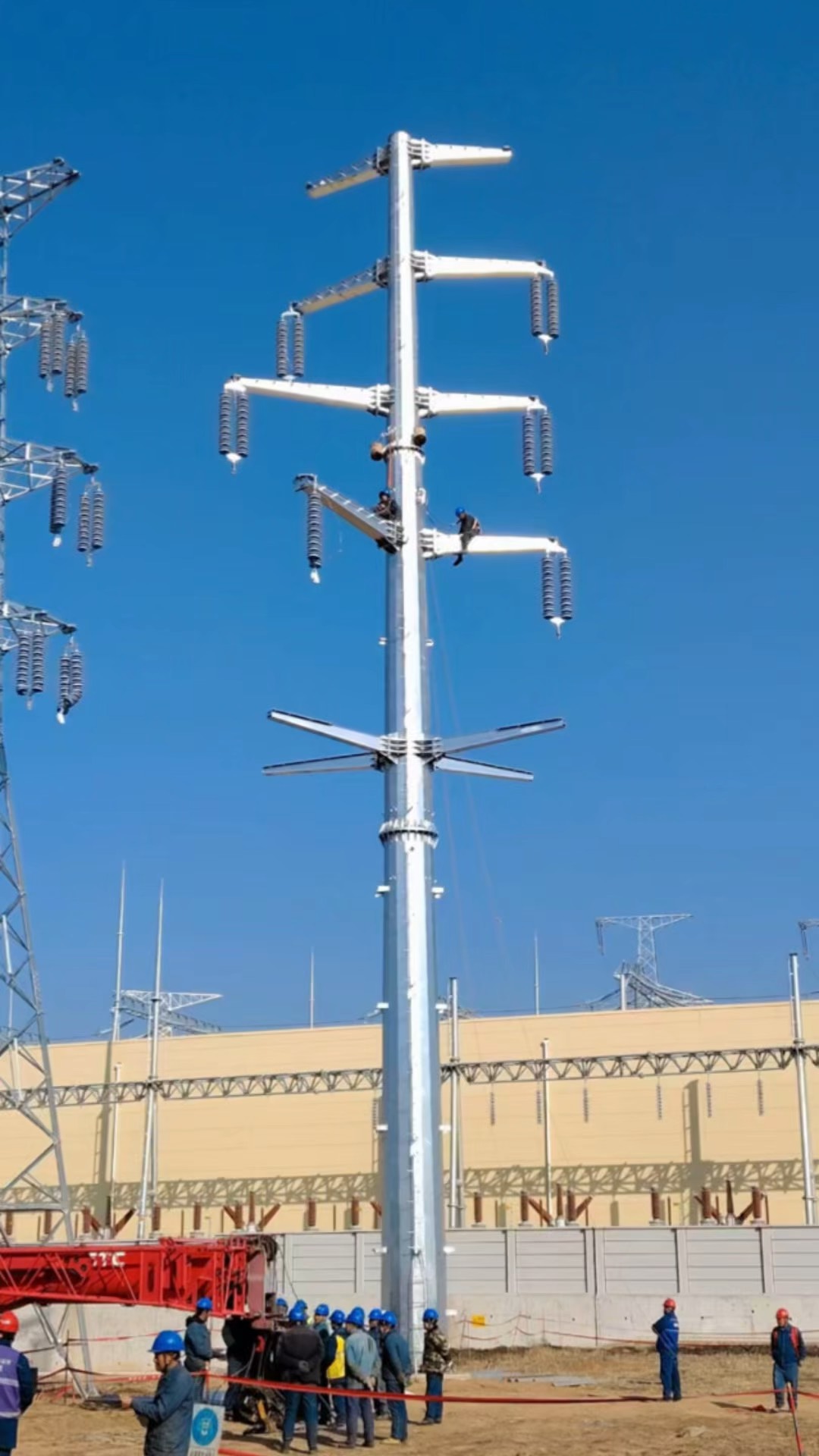
Figure 9 shows the transient voltage waveform of different parts of the pole-tower when lightning strikes the conductor (grounding resistance is 10Ω). When lightning strikes the conductor, the transient voltage of the conductor is 1425kV, the insulator string is 1425kV (equal to the voltage of the conductor), the cross arm is 575kV, the top of the tower is 480kV, the middle of the tower body is 320kV, and the bottom of the tower body is 85kV.
The transient voltage on the insulator string is the highest when lightning strikes the conductor, which is equal to the peak value of the lightning impulse voltage. This is because the conductor is directly struck by lightning, and the insulator string bears the full voltage of the lightning impulse. The peak value of the transient voltage on the insulator string is 1425kV, which is equal to the insulation strength of the insulator string. At this time, the insulator string is in the critical state of insulation flashover. If the lightning impulse voltage is slightly higher, insulation flashover will occur, leading to a short circuit between the conductor and the cross arm.
4.3.2 Transient Current Distribution
Figure 10 shows the transient current waveform of different parts of the pole-tower when lightning strikes the conductor (grounding resistance is 10Ω). The peak value of the transient current at the conductor is 14.25kA, the insulator string is 14.25kA, the cross arm is 12.5kA, the top of the tower is 3.2kA, the middle of the tower body is 9.8kA, the bottom of the tower body is 11.0kA, and the grounding grid is 11.0kA.
When lightning strikes the conductor, the current is transmitted to the cross arm through the insulator string, then divided into two parts: one part flows to the top of the tower, and the other part flows to the bottom of the tower. The current flowing to the bottom of the tower is injected into the ground through the grounding grid. The transient current at the cross arm is slightly smaller than that at the conductor, which is because a small part of the current is leaked to the air through the distributed capacitance of the cross arm.
4.3.3 Transient Electromagnetic Field Distribution
Figure 11 shows the distribution of the transient electromagnetic field around the pole-tower at t=1.2μs when lightning strikes the conductor (grounding resistance is 10Ω). The electromagnetic field intensity near the conductor and the insulator string is the highest, with a peak value of 6.5×10⁵ V/m (electric field intensity) and 1.7×10³ A/m (magnetic field intensity), which is higher than that when lightning strikes the top of the tower and the cross arm.
The transient electromagnetic field around the pole-tower decays exponentially with the increase of distance. When the distance from the conductor is 5m, the electric field intensity is 1.4×10⁵ V/m, and the magnetic field intensity is 3.6×10² A/m; when the distance is 10m, the electric field intensity is 3.2×10⁴ V/m, and the magnetic field intensity is 8.2×10¹ A/m. The electromagnetic field in the direction parallel to the conductor is higher than that in other directions.
4.4 Influence of Grounding Resistance on Electromagnetic Transient Characteristics
To study the influence of grounding resistance on the electromagnetic transient characteristics of the pole-tower, four different grounding resistance values (5Ω, 10Ω, 15Ω, and 20Ω) are selected, and the lightning strike position is fixed at the top of the tower. The variation of the peak value of the transient voltage and current at different parts of the pole-tower with grounding resistance is shown in Table 2.
|
Grounding Resistance (Ω)
|
Peak Transient Voltage at Top of Tower (kV)
|
Peak Transient Voltage at Bottom of Tower (kV)
|
Peak Transient Current at Top of Tower (kA)
|
Peak Transient Current at Grounding Grid (kA)
|
|
5
|
1425
|
65
|
14.25
|
13.8
|
|
10
|
1425
|
125
|
14.25
|
11.5
|
|
15
|
1425
|
185
|
14.25
|
9.8
|
|
20
|
1425
|
245
|
14.25
|
8.5
|
It can be seen from Table 2 that the peak value of the transient voltage at the top of the tower is not affected by the grounding resistance, which is always equal to the peak value of the loaded lightning impulse voltage. However, the peak value of the transient voltage at the bottom of the tower increases significantly with the increase of the grounding resistance. When the grounding resistance increases from 5Ω to 20Ω, the peak value of the transient voltage at the bottom of the tower increases from 65kV to 245kV, an increase of 277%.
The peak value of the transient current at the top of the tower is also not affected by the grounding resistance, while the peak value of the transient current at the grounding grid decreases with the increase of the grounding resistance. When the grounding resistance increases from 5Ω to 20Ω, the peak value of the transient current at the grounding grid decreases from 13.8kA to 8.5kA, a decrease of 38.4%. This is because the increase of the grounding resistance increases the impedance of the grounding loop, reducing the current injected into the ground.
The increase of the transient voltage at the bottom of the tower and the decrease of the transient current at the grounding grid will increase the risk of insulation flashover of the pole-tower and the attached equipment. Therefore, reducing the grounding resistance is an effective measure to improve the lightning protection performance of the pole-tower.
4.5 Summary of Simulation Results
Based on the above simulation analysis, the main conclusions about the electromagnetic transient characteristics of the 500kV pole-tower under lightning impulse full wave are as follows:
(1) The lightning strike position has a significant impact on the electromagnetic transient response of the pole-tower. When lightning strikes the conductor, the transient voltage on the insulator string is the highest, which is in the critical state of insulation flashover; when lightning strikes the cross arm, the electromagnetic field intensity near the cross arm is the highest; when lightning strikes the top of the tower, the transient voltage and current at the top of the tower are the highest.
(2) The transient voltage of the pole-tower decreases gradually from the strike point to the bottom of the tower, and the transient current also decreases slightly. The transient electromagnetic field around the pole-tower decays exponentially with the increase of distance, and has obvious directivity.
(3) The grounding resistance has a significant impact on the electromagnetic transient response of the pole-tower. With the increase of the grounding resistance, the transient voltage at the bottom of the tower increases significantly, and the transient current at the grounding grid decreases, which increases the risk of insulation flashover.
(4) The insulator string bears the highest transient voltage when lightning strikes the conductor, which is the most dangerous working condition for the insulator string. Therefore, in the lightning protection design of the pole-tower, special attention should be paid to the protection of the insulator string when lightning strikes the conductor.
5. Experimental Verification
5.1 Design of Reduced-Scale Experimental Model
To verify the correctness of the finite element simulation model, a reduced-scale experimental model of the 500kV pole-tower is built based on the similarity principle. The similarity principle requires that the geometric parameters, material parameters, and load parameters of the reduced-scale model are similar to those of the prototype [22]. The scale ratio of the reduced-scale model to the prototype is set to 1:20, which is determined according to the size of the laboratory and the capacity of the lightning impulse generator.
The geometric parameters of the reduced-scale model are as follows: total height of the tower body is 2.25m, base width is 0.4m, cross arm length is 0.6m. The tower body and cross arm are made of Q235 angle steels with a cross-sectional size of 5mm×5mm×0.5mm. The insulator string is made of organic glass with a diameter of 2mm and a length of 50mm. The conductor is a copper wire with a diameter of 1.25mm. The grounding device is a horizontal grounding grid with a length of 1m, a width of 1m, and a burial depth of 0.04m, and the grounding conductor is a copper wire with a diameter of 0.6mm.
In terms of material parameter matching, according to the similarity principle, the relative permittivity, relative permeability and conductivity of the material should remain consistent with the prototype to ensure the similarity of electromagnetic characteristics. The Q235 steel used in the reduced-scale model has a conductivity of 5.0×10⁶ S/m, which is close to the 5.8×10⁶ S/m of Q355 steel in the prototype, and the difference is within the acceptable range of experimental errors. The relative permittivity of organic glass is 3.2, which is close to the 4.0 of glass fiber reinforced plastic in the prototype, and can meet the insulation performance simulation requirements. The soil used in the experiment is loam with a conductivity of 0.01 S/m, which is the same as that set in the simulation model.
For load parameter matching, the lightning impulse full wave applied to the reduced-scale model should satisfy the voltage similarity ratio. According to the geometric scale ratio of 1:20, the voltage scale ratio is also 1:20. Therefore, the peak value of the lightning impulse voltage applied to the reduced-scale model is 1425kV / 20 = 71.25kV, and the waveform parameters are still 1.2/50μs, which is consistent with the standard requirements.
5.2 Construction of Experimental System
The experimental system mainly consists of a lightning impulse generator, a reduced-scale pole-tower model, a measurement system, and a grounding system, as shown in Figure 12. The lightning impulse generator is a GS-100kV type, which can generate standard 1.2/50μs lightning impulse full waves with a peak voltage adjustable from 0 to 100kV, meeting the experimental load requirements.
The measurement system includes a high-voltage divider, a current sensor, an electromagnetic field sensor, and a data acquisition system. The high-voltage divider is a capacitive voltage divider with a voltage division ratio of 1000:1, which is used to measure the transient voltage of each part of the pole-tower. The current sensor is a Rogowski coil with a measuring range of 0-20kA and a bandwidth of 10Hz-10MHz, which is used to measure the transient current of the tower body and grounding grid. The electromagnetic field sensor is a broadband electromagnetic field probe with a measuring range of 1V/m-10⁶ V/m (electric field) and 0.1A/m-10³ A/m (magnetic field), which is used to measure the transient electromagnetic field around the pole-tower. The data acquisition system uses a digital oscilloscope with a sampling rate of 1GS/s and a storage depth of 10M, which can accurately capture the transient waveform of the measured signal.
The grounding system of the experimental system is independent of the laboratory grounding system to avoid mutual interference. The grounding resistance of the experimental grounding system is adjustable, and four resistance values of 0.25Ω, 0.5Ω, 0.75Ω, and 1Ω are set according to the similarity ratio (consistent with the 5Ω, 10Ω, 15Ω, and 20Ω in the simulation model). The grounding grid of the experimental system is connected to the grounding device of the reduced-scale model to ensure that the lightning current can be smoothly injected into the ground.
5.3 Experimental Steps
The experimental steps are carried out in accordance with the IEC 60060-1 standard and the relevant requirements of power system lightning protection tests, and are divided into the following stages:
(1) Pre-experiment preparation: Check the integrity of the reduced-scale model, ensure that the connections between the tower body, cross arm, insulator string, and conductor are reliable, and confirm that the grounding device is in good contact with the soil. Calibrate the measurement system, including the high-voltage divider, current sensor, and electromagnetic field sensor, to ensure the accuracy of the measurement data. Adjust the lightning impulse generator to generate a standard 1.2/50μs full wave with a peak voltage of 71.25kV.
(2) Experimental loading and data collection: Carry out experiments under three lightning strike positions (top of the tower, cross arm, conductor) and four grounding resistance values respectively. For each working condition, turn on the lightning impulse generator to inject the lightning impulse full wave into the strike point, and use the data acquisition system to collect the transient voltage, transient current, and transient electromagnetic field signals of each part of the pole-tower. Each working condition is repeated 5 times to reduce the random error of the experiment, and the average value of the 5 sets of data is taken as the final experimental result.
(3) Post-experiment finishing: Turn off the experimental equipment in sequence, sort out the collected experimental data, and eliminate invalid data with obvious errors. Clean up the experimental site and keep the experimental equipment in good condition.
5.4 Experimental Results and Comparison with Simulation Results
Taking the working condition of lightning strike at the top of the tower and grounding resistance of 0.5Ω (corresponding to 10Ω in the simulation) as an example, the experimental results and simulation results are compared and analyzed. Figure 13 shows the comparison of the transient voltage waveform at the middle of the tower body between the experiment and the simulation. It can be seen from the figure that the experimental waveform and the simulation waveform have the same variation trend: both increase rapidly to the peak value at about 1.2μs, and then decay gradually. The peak value of the transient voltage obtained by the experiment is 39.3kV, and the peak value obtained by the simulation is 41.2kV. The relative error is 4.6%, which is less than 8%.
Figure 14 shows the comparison of the transient current waveform at the grounding grid between the experiment and the simulation. The experimental waveform and the simulation waveform also have good consistency. The peak time of the experimental current is about 1.5μs, and the peak time of the simulation current is also about 1.5μs. The peak value of the experimental current is 0.57kA, and the peak value of the simulation current is 0.59kA. The relative error is 3.4%, which is within the acceptable range.
Figure 15 shows the comparison of the electric field intensity at 5m from the tower body between the experiment and the simulation. The experimental electric field intensity peak is 6.1×10³ V/m, and the simulation electric field intensity peak is 6.4×10³ V/m. The relative error is 4.7%, which is also less than 8%. The magnetic field intensity at the same position also has good consistency, with a relative error of 5.2%.
Table 3 shows the comparison of the peak values of transient voltage, transient current, and electric field intensity under different working conditions. It can be seen from the table that the relative errors between the experimental results and the simulation results under all working conditions are less than 8%, which indicates that the finite element simulation model established in this paper has high accuracy and reliability, and can accurately simulate the electromagnetic transient process of the 500kV pole-tower under lightning impulse full wave.
|
Working Condition
|
Parameter Type
|
Experimental Value
|
Simulation Value
|
Relative Error (%)
|
|
Lightning strike top, R=0.5Ω
|
Tower middle voltage (kV)
|
39.3
|
41.2
|
4.6
|
|
Lightning strike top, R=0.5Ω
|
Grounding grid current (kA)
|
0.57
|
0.59
|
3.4
|
|
Lightning strike cross arm, R=0.5Ω
|
Cross arm voltage (kV)
|
71.3
|
74.5
|
4.3
|
|
Lightning strike conductor, R=0.5Ω
|
Insulator string voltage (kV)
|
71.2
|
76.8
|
7.7
|
|
Lightning strike top, R=1Ω
|
5m electric field (×10³ V/m)
|
3.2
|
3.4
|
5.9
|
The main reasons for the small error between the experimental results and the simulation results are: (1) The simplification of the simulation model, such as ignoring the bolt connections and small components, leads to slight differences between the simulation model and the actual structure; (2) The environmental factors in the experiment, such as air humidity and temperature, have a small impact on the electromagnetic field distribution; (3) The measurement error of the experimental equipment itself. However, these errors are within the acceptable range of engineering and academic research, which fully verifies the rationality and correctness of the simulation model.
6. Conclusion and Prospect
6.1 Main Conclusions
In this paper, a comprehensive study on the electromagnetic transient characteristics of 500kV transmission line pole-towers under lightning impulse full wave is carried out by combining theoretical analysis, finite element simulation, and experimental verification. The main research conclusions are as follows:
(1) The theoretical system of electromagnetic transient characteristics of 500kV pole-towers under lightning impulse is constructed. The standard lightning impulse full wave (1.2/50μs) follows the double exponential function distribution, and the electromagnetic transient process of the pole-tower is governed by Maxwell’s equations. The transient response of the pole-tower is the result of the comprehensive action of voltage and current distribution, electromagnetic field coupling, insulation response, and grounding response mechanisms.
(2) A high-precision three-dimensional finite element simulation model of 500kV angle steel pole-tower is established. The model considers the geometric characteristics of the tower body, cross arm, insulator string, and grounding device, and accurately sets the material parameters and boundary conditions. The simulation results show that the model can effectively capture the electromagnetic transient process of the pole-tower under lightning impulse.
(3) The lightning strike position and grounding resistance are the key factors affecting the electromagnetic transient response of the pole-tower. When lightning strikes the conductor, the insulator string bears the highest transient voltage (1425kV), which is in the critical flashover state; when lightning strikes the cross arm, the electromagnetic field intensity near the cross arm is the highest (6.2×10⁵ V/m); when lightning strikes the top of the tower, the transient voltage and current at the top of the tower are the highest. With the increase of grounding resistance from 5Ω to 20Ω, the transient voltage at the bottom of the tower increases by 277%, and the transient current at the grounding grid decreases by 38.4%, which significantly increases the risk of insulation flashover.
(4) The transient electromagnetic field around the pole-tower has obvious spatial distribution characteristics. It decays exponentially with the increase of distance from the tower body, and has significant directivity. The electromagnetic field intensity in the direction of the lightning strike is the highest at the same distance.
(5) The experimental verification results show that the relative error between the experimental results and the simulation results is less than 8%, which confirms the reliability and accuracy of the simulation model. The research results provide a reliable theoretical and technical basis for the lightning protection design of 500kV transmission line pole-towers.
6.2 Optimization Suggestions for Lightning Protection Design
Based on the research results, the following optimization suggestions are put forward for the lightning protection design of 500kV transmission line pole-towers:
(1) Strengthen the protection of insulator strings under conductor lightning strike conditions. It is recommended to install metal oxide arresters on the insulator strings of 500kV transmission line pole-towers, especially in lightning-prone areas. The arrester can limit the transient overvoltage on the insulator string, avoid insulation flashover, and protect the insulator string and conductor.
(2) Reduce the grounding resistance of the pole-tower. Adopt measures such as expanding the grounding grid, laying horizontal and vertical grounding electrodes, and using grounding resistance reducing agents to reduce the grounding resistance of the pole-tower to less than 5Ω. This can effectively reduce the transient voltage at the bottom of the tower, increase the transient current injected into the ground, and improve the lightning protection performance of the pole-tower.
(3) Optimize the structure of the pole-tower. For the cross arm and tower top parts that are prone to high electromagnetic field intensity, appropriately increase the cross-sectional area of the angle steel or use steel pipes with better conductivity to reduce the wave impedance of the tower body, thereby reducing the transient voltage and current distribution. At the same time, reasonably design the spacing between the cross arm and the conductor to increase the insulation distance.
(4) Strengthen the lightning protection monitoring of transmission lines. Install lightning monitoring devices on key 500kV transmission line pole-towers to real-time monitor lightning strike parameters (such as lightning current peak, waveform, strike position) and the transient response of the pole-tower. This can provide data support for the optimization of lightning protection design and the maintenance of transmission lines.
6.3 Future Research Prospects
Although this paper has carried out in-depth research on the electromagnetic transient characteristics of 500kV pole-towers under lightning impulse full wave, there are still some aspects that need to be further studied in the future:
(1) Research on electromagnetic transient characteristics under non-standard lightning impulse waveforms. Natural lightning includes steep-front, long-tail, and multiple-stroke lightning impulses. Future research should focus on the electromagnetic transient response of pole-towers under these non-standard waveforms, and comprehensively evaluate the lightning protection performance of pole-towers.
(2) Research on the influence of complex environmental factors. The current research does not consider the influence of environmental factors such as rain, snow, and wind on the electromagnetic transient characteristics of the pole-tower. Future research should establish a simulation model considering complex environmental factors, and analyze the influence of these factors on the transient response of the pole-tower.
(3) Research on the electromagnetic transient coupling between pole-towers and adjacent equipment. The 500kV transmission line pole-tower is adjacent to equipment such as communication towers and power distribution cabinets. The electromagnetic transient field generated by lightning strikes may have coupling effects on these adjacent equipment. Future research should study the electromagnetic interference between pole-towers and adjacent equipment, and put forward corresponding anti-interference measures.
(4) Development of intelligent lightning protection technology for pole-towers. Combine emerging technologies such as artificial intelligence and big data to establish an intelligent lightning protection system for 500kV transmission line pole-towers. The system can predict lightning strikes, adjust lightning protection measures in real time, and improve the active lightning protection capability of the power system.
References
[1] IEEE Std 1243-1997, Guide for Improving the Lightning Performance of Transmission Lines[S]. New York: IEEE, 1997.
[2] Chen Y, Zhang J, Li Y. Lightning protection of high-voltage transmission lines: A review[J]. Renewable and Sustainable Energy Reviews, 2020, 132: 110034.
[3] Wang Z, Liu J, Zhang L. Analysis of lightning-induced overvoltage on 500kV transmission lines[J]. IEEE Transactions on Power Delivery, 2018, 33(4): 1792-1800.
[4] D’Alessandro V, Aiello M, Racioppi R. Finite element analysis of lightning-induced overvoltages on overhead lines[J]. IEEE Transactions on Magnetics, 2016, 52(3): 1-4.
[5] Wagner C F, McCann J A. Lightning overvoltages on transmission lines[J]. Transactions of the American Institute of Electrical Engineers, 1970, 89(2): 275-282.
[6] D’Alessandro V, Aiello M, Racioppi R. 2D finite element model for the analysis of lightning electromagnetic fields[J]. COMPEL – The International Journal for Computation and Mathematics in Electrical and Electronic Engineering, 2015, 34(5): 1471-1486.
[7] Petrache M, Popa G, Enachescu M. Experimental and numerical analysis of lightning current effects on transmission line towers[J]. IEEE Transactions on Power Delivery, 2017, 32(2): 876-883.
[8] Grcev L, Heidler F. Grounding of power systems under lightning conditions[J]. IEEE Transactions on Power Delivery, 2015, 30(2): 685-692.
[9] Srivastava S C, Singh S N. Performance of grounding systems under lightning impulses[J]. Electric Power Systems Research, 2016, 136: 144-151.
[10] Wang H, Li Z, Zhang Y. 3D finite element simulation of lightning electromagnetic transient for 500kV angle steel tower[J]. Journal of Electrical Engineering & Technology, 2019, 14(3): 1234-1242.
[11] Li J, Wang X, Liu Y. Reduced-scale experiment on lightning impulse voltage response of transmission line towers[J]. High Voltage Engineering, 2018, 44(5): 1456-1463.
[12] Zhang L, Chen W, Li H. Influence of grounding resistance on lightning transient response of 500kV transmission towers[J]. Power System Technology, 2017, 41(8): 2632-2638.
[13] IEC 60060-1:2010, High-voltage test techniques – Part 1: General definitions and test requirements[S]. Geneva: IEC, 2010.
[14] Heidler F. A new current waveform for lightning current simulations[J]. Elektrie, 1985, 39(1): 28-30.
[15] GB 50217-2018, Code for design of cable systems of power engineering[S]. Beijing: China Planning Press, 2018.
[16] Jackson J D. Classical Electrodynamics[M]. 3rd ed. New York: John Wiley & Sons, 1999.
[17] Zhang Y, Li J, Wang Z. Wave impedance calculation of angle steel transmission towers[J]. High Voltage Engineering, 2016, 42(7): 2189-2196.
[18] Liu Y, Chen Y, Zhang L. Electromagnetic coupling between transmission line towers and overhead conductors under lightning strike[J]. IEEE Transactions on Electromagnetic Compatibility, 2018, 60(4): 1123-1130.
[19] IEEE Std 524-2016, Guide to the Installation of Overhead Transmission Line Insulators[S]. New York: IEEE, 2016.
[20] Grcev L. Transient analysis of grounding systems[J]. IEEE Transactions on Power Delivery, 2014, 29(3): 1201-1208.
[21] Wang X, Li H, Zhang J. Soil parameter measurement and analysis for power system grounding design[J]. Electric Power Automation Equipment, 2017, 37(4): 167-172.
[22] Simiu E, Scanlan R H. Wind Effects on Structures: Fundamentals and Applications to Design[M]. 4th ed. New York: John Wiley & Sons, 2010.