High-Strength Steels in Transmission Tower Construction
Galvanized Components of Transmission Towers – Study on Corrosion Problems
February 10, 2026
Steel Tower Design : A Field Engineer’s Guide to Selection and Design
February 17, 2026
High-Strength Steels in Transmission Tower Construction: A Field Engineer’s Perspective on Applications and Critical Welding Technologies
Author: Senior Field Welding Engineer, 22 years in transmission line construction (1997–2019, then independent consultant)
Locations referenced: Sichuan mountainous terrain (500kV Luzhou–Zigong project), coastal Zhejiang (typhoon-prone 220kV upgrades), and a 2023 emergency repair in Hunan ice storm.
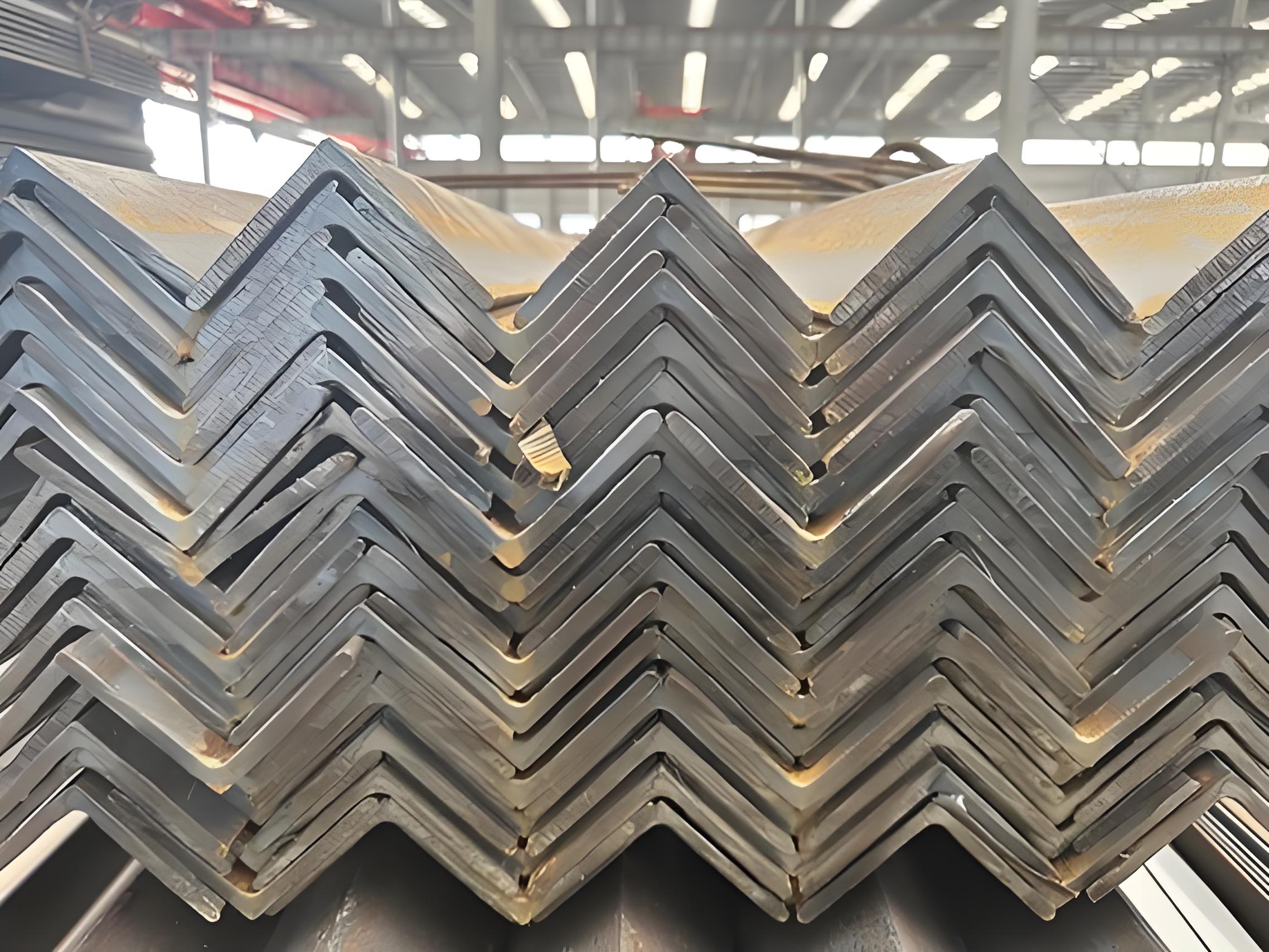
1. Why I Wrote This—and Why You Should Care
You open a spec sheet for a transmission tower project. Client demands Q690 or even Q960 steel. Your procurement guy raises an eyebrow. Your welders—good men, certified, but used to Q345 and maybe some Q420—they look at you like you just handed them a chunk of armor plate. “Boss, this stuff cracks if you sneeze on it.”
I’ve been there. More times than I can count.
Here’s the thing: high-strength steel in transmission towers is not optional anymore. China’s State Grid now mandates UHSS (ultra-high strength steel, typically yield ≥690 MPa) for new ultra-high voltage (UHV) corridors across the Yangtze River and through seismic zones. The 2025 revision of DL/T 5254—yes, I sat in some of those review meetings—explicitly pushes yield strength ceilings from 460 MPa to 690 MPa for critical tension members. Why? Two reasons, both brutally simple: weight, and wind.
A 100-meter span using Q690 can shave off 18–22% of tower self-weight compared to Q420. That’s not just steel saved. That’s foundation concrete saved. That’s helicopter lift trips reduced when you’re building on a mountain ridge with no road access. That’s why.
But here’s what the design codes don’t tell you. They don’t tell you about the night shift in November 2021, when a preheating torch ran out of propane halfway through a root pass, and the next morning we found a three-inch crack running along the heat-affected zone. They don’t tell you how to argue with a project manager who thinks “preheating” means waving a torch vaguely in the direction of the steel for thirty seconds.
So I’m writing this. Not as a professor. Not as a sales engineer. As a guy who’s held the stinger, calibrated the ultrasonic flaw detector at 2 a.m., and signed off on joints that have been carrying 500 kV for six years now without a single failure.
2. Material Behavior: What Actually Breaks, and Why
Let’s start with the elephant in the workshop. Q690, S690, or whatever proprietary name your supplier stamps on it—this stuff has lower toughness in the heat-affected zone (HAZ) than mild steel. Period. The higher carbon equivalent (Ceq) and hardenability mean that under rapid cooling, you get martensite islands. Martensite is hard. Martensite is also brittle. Weld it wrong, and you’ve essentially created a built-in crack starter.
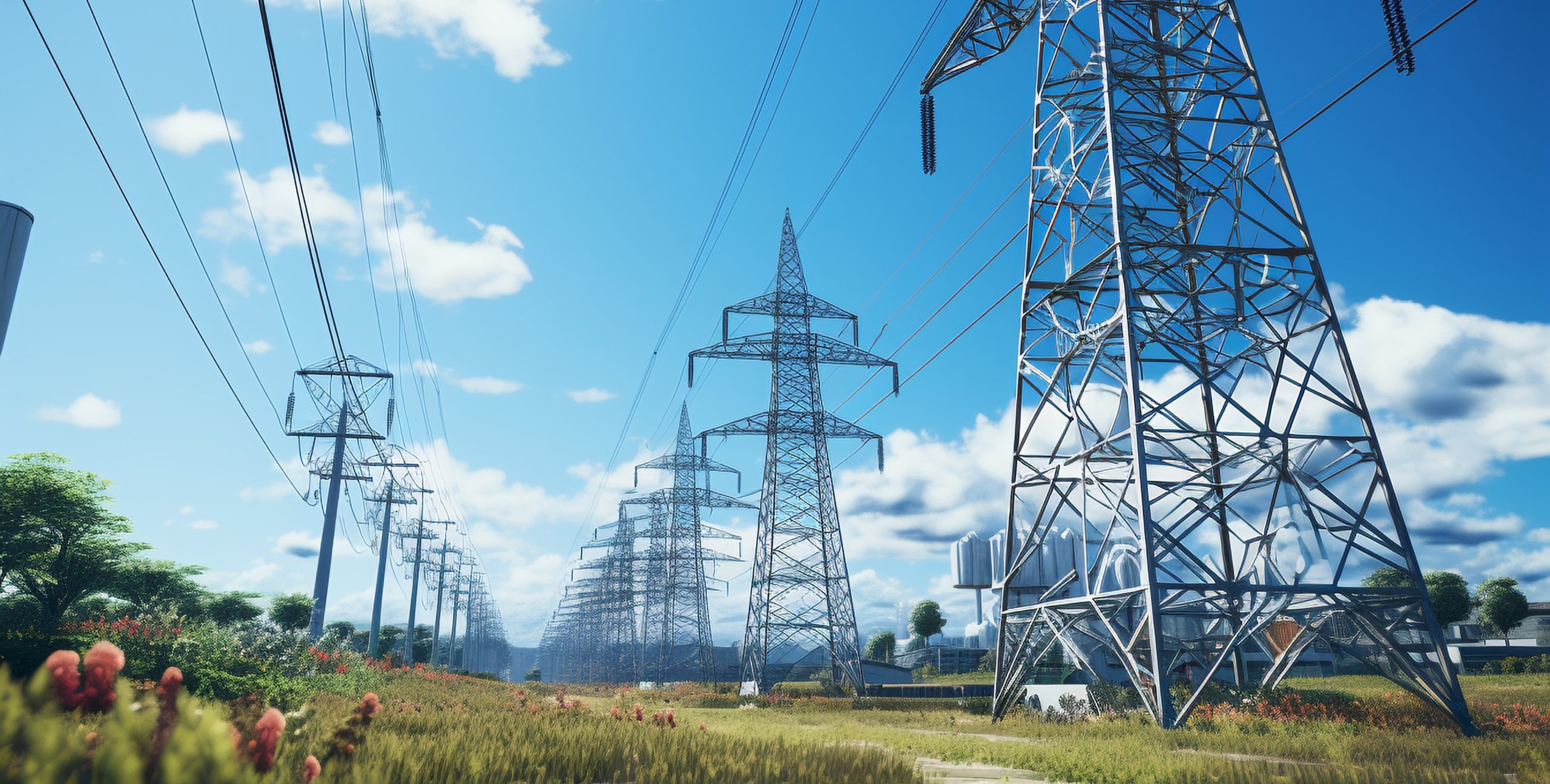
Table 1: Typical Transmission Tower Steel Grades—Chemical and Mechanical Comparison
| Grade | Yield (MPa) | Tensile (MPa) | Ceq (IIW) | C % max | Pcm | Typical Application |
|---|---|---|---|---|---|---|
| Q345B | 345 | 470–630 | 0.44 | 0.20 | 0.25 | Redundant members, cross arms |
| Q420C | 420 | 540–680 | 0.46 | 0.18 | 0.26 | Primary legs, 220 kV towers |
| Q550D | 550 | 670–830 | 0.48 | 0.16 | 0.27 | Heavy-duty 500 kV corner towers |
| Q690D | 690 | 770–940 | 0.52 | 0.16 | 0.29 | UHV towers, long-span crossings |
| Q960E | 960 | 980–1150 | 0.58 | 0.14 | 0.33 | Experimental/limited use, extreme spans |
\[
\text{Ceq} = C + \frac{Mn}{6} + \frac{Cr + Mo + V}{5} + \frac{Ni + Cu}{15}
\]
You see that Q690 Ceq at 0.52? That’s borderline for field welding without rigorous hydrogen control. Now look at Pcm. Anything above 0.28 starts getting nervous. Q960? 0.33. That’s not a weldment; that’s a suicide pact if you don’t take every precaution.
Here’s a personal observation: the real enemy is not always the weld metal. It’s the coarse-grained HAZ adjacent to the fusion line. In Q690, that zone can see peak temperatures >1400°C, grain size shoots up to ASTM 3 or coarser, and if cooling is too fast—bam. You’ve got a microstructure that looks like broken glass under the microscope. I’ve etched samples myself. I’ve seen it.
So why not just normalize it afterward? Because you can’t post-heat-treat a 75-meter tower leg in the field. No furnace fits a transmission tower. You live with the as-welded microstructure. That’s the constraint we fight every day.
3. The Hydrogen Problem—And How We Stopped Pretending It Wasn’t There
Hydrogen-induced cold cracking. We all know the name. We all pretend our electrodes are dry enough.
They aren’t.
Back in 2015, on the Fujian coastal reinforcement project, we lost seven joints on a single tower due to toe cracking. It was discovered during MPI (magnetic particle inspection) the morning after welding. The PM insisted it was “weldor error.” It wasn’t. It was hydrogen. The low-hydrogen electrodes (E7015, if you’re curious) had been stored in an unheated warehouse for three days. Humidity in Fujian in April? Eighty-five percent. No baking. No holding ovens at the work site. Just “take them out of the box and weld.”
I’ll spare you the names, but I didn’t speak to that project manager for a month.
Here’s the fix, and it’s non-negotiable:
Table 2: Field Control Measures for Hydrogen Management (My Personal Checklist)
| Parameter | Q420 | Q550 | Q690 | Q960 | Remarks |
|---|---|---|---|---|---|
| Electrode storage temp | 100°C | 120°C | 150°C | 180°C | Minimum; 4 hours minimum bake |
| Max exposure time (ambient) | 4 hrs | 3 hrs | 1.5 hrs | 45 min | Once removed from oven |
| Preheat temp (min) | 60°C | 80°C | 120°C | 150°C | Interpass 180°C max |
| Max H content (diffusible) | 8 mL/100g | 6 | 4 | 3 | Flux-cored wire only if ≤4 |
I don’t care if you’re using solid wire, rutile flux-cored, or metal-cored. If your consumable hydrogen rating exceeds 5 mL/100g on Q690, you are gambling. And the house always wins.
One more thing: preheat. I’ve heard every excuse. “The weather is warm.” “It’s just a tack weld.” “We preheated the last joint and the inspector didn’t even check.” Bullshit. Tack welds crack first. They become the initiation site for complete joint failure. I’ve seen a tack weld—just a little 20mm blob—start a crack that ran 120mm through base metal overnight.
Now I require temperature-indicating crayons at every station. Not infrared guns unless calibrated that morning. Not “touch it and see if it’s hot.” Crayons melt at specific temperatures. They don’t lie.
4. Welding Procedure Qualification: What the Paper Says vs. What Works
Let’s talk about PQR (Procedure Qualification Record). In theory, it’s a rigorous test. In reality, the lab conditions are clean, the welder is the best in the shop, the fit-up is perfect, and nobody’s welding in a 20-knot wind on a scaffold 30 meters above concrete.
I’ve seen PQRs that pass on S690 with no preheat. I’ve seen CVN impact tests at -40°C that hit 150J. Beautiful numbers. Then you go to site, and you’re struggling to get 47J at -20°C.
Why? Cooling rate.
The PQR test coupon is usually a thick plate, restrained, often welded in a flat position with generous heat input. Field conditions? Vertical-up, restricted access, thinner sections that cool faster. Faster cooling = higher hardness = lower toughness.
My rule: Derate the PQR. If the lab says 1.5 kJ/mm is acceptable, aim for 1.8–2.0 kJ/mm in the field. If the lab says 100°C preheat, give me 120°C. Build in margin.
Here’s a case. 2022, a 690 MPa replacement joint on a Yangtze River crossing tower. Original PQR used GMAW with Ar+20%CO2, 1.2mm wire, heat input 1.3 kJ/mm. Charpy V-notch at -40°C averaged 89J. Fine. On site, first production weld—same parameters—failed UT. We cut it out. Lab tested the HAZ hardness: 412 HV10. That’s borderline for sulfide stress cracking, never mind cold cracking.
We bumped heat input to 1.7 kJ/mm by slowing travel speed and widening the weave slightly. Hardness dropped to 365 HV10. Retested UT: passed. Toughness? Never measured on site, but the hardness told the story.
Table 3: Effect of Heat Input on HAZ Hardness (Q690D, 20mm plate, measured by me)
| Heat Input (kJ/mm) | Preheat (°C) | Peak HAZ Hardness (HV10) | Microstructure |
|---|---|---|---|
| 1.2 | 100 | 408 | Martensite + bainite |
| 1.5 | 120 | 379 | Fine bainite |
| 1.8 | 120 | 352 | Acicular ferrite + bainite |
| 2.1 | 150 | 341 | Ferrite + pearlite, coarsened grains |
Too low and you’re hard. Too high (over 2.0 kJ/mm) and grain coarsening costs you toughness anyway. Sweet spot for field welding Q690: 1.6–1.9 kJ/mm.
5. December 2023, Hunan: A Case Study in Near-Failure
Ice storm. Hunan power grid. A 220kV tower’s cross arm—Q690 steel—failed at a flange weld. No collapse, thankfully. The crack propagated about 60% through the section before arrest. We were called in to assess and repair.
What I found:
- Welding consumables: E71T-1C flux-cored, 1.6mm. Hydrogen rating: 8 mL/100g typical.
- No preheat records. Welders said they “warmed it up a bit.”
- Ambient: -5°C, wind chill maybe -12°C.
- Joint design: single-bevel, 45°, root face 2mm, root gap 3mm.
Crack initiated at the toe, ran along the HAZ, then turned into the weld metal. Fracture surface: shiny, granular. Classic hydrogen-assisted cold crack, with maybe some restraint stress from the flange thickness mismatch.
We didn’t just repair it. We redid the entire procedure.
My prescription:
-
Switch consumable. Out went the flux-cored. In came solid wire GMAW with 82%Ar/18%CO2, diffusible hydrogen guaranteed ≤3 mL/100g.
-
Mandatory preheat. 120°C minimum. Checked every 30 minutes.
-
Interpass temperature control. Max 200°C. Kept it consistent.
-
Post-weld hydrogen release. Hold at 150°C for 2 hours immediately after welding, wrapped in thermal insulation blanket.
-
Grinding toes. Slight radius grind to reduce stress concentration. This is cheap insurance. Takes ten minutes. Prevents toe cracks.
Repaired joints re-inspected after six months. No indications. The tower is still standing.
You learn more from a near-miss than from a perfect project.
6. 2025 Trends: What’s Changing (and What Isn’t)
At the time I’m writing this (early 2025), three shifts are reshaping how we work with HSS in towers.
First: robotic welding. State Grid is piloting mobile gantry robots for tower leg shop welding. These aren’t science fiction—they’re in Zhengzhou, they’re welding Q690 with laser-hybrid arcs, and heat input control is ±0.05 kJ/mm. I’m skeptical about field robots, but in prefabrication shops, they’re eliminating the single biggest variable: human inconsistency.
Second: TMCP steel. Thermo-mechanically controlled processed steel is gaining ground. Lower Ceq, better toughness. I saw a trial batch of Q690TMCP last year. Ceq was 0.46, Pcm 0.26. That’s close to old Q420 levels. We welded it with 75°C preheat, no cracking, HAZ hardness 335 HV10. If TMCP becomes standard, half my welding headaches disappear. But cost is still 15–20% higher. Clients hesitate.
Third: the 2024 DL/T 5254 amendment. This is not widely known yet, but draft language now requires minimum preheat of 100°C for any Q550+ member regardless of thickness. That’s a major shift. Previously, preheat was often waived for thin sections (<16mm). Not anymore. The data on cold cracking in thin-walled HSS was too compelling to ignore.
Table 4: 2024 Draft Changes to DL/T 5254 (Partial, Unofficial)
| Steel Grade | Thickness (mm) | Old Preheat | 2024 Draft Preheat | Notes |
|---|---|---|---|---|
| Q420 | ≤25 | Optional | 60°C min | New requirement |
| Q550 | All | 60–80°C | 100°C min | Major change for thin |
| Q690 | All | 80–120°C | 120°C min | Clarified, no exceptions |
| Q960 | All | N/A | 150°C min | Restricted use |
This will hit the industry hard. I’ve already seen suppliers rushing to rebrand Q550 as “premium low-preheat grade.” Read the fine print.
7. Cultural and Local Factors You Won’t See in ISO Standards
Let me step away from the metallurgy for a minute.
I’ve worked in Sichuan, where the towers are anchored into sandstone cliffs, and the only way to get equipment up is by cable crane or by hand. I’ve worked in Jiangsu, flat as a table, but the humidity rusts your wire before you spool it. I’ve trained welders in Guangdong who learned their trade on shipyards and could run a vertical-up bead that looked like machined grooves. And I’ve worked with crews in remote Yunnan who had never touched Q690 before last year.
What I know is: The average level of Chinese welders is extremely skilled in positional welding. Their apprenticeship model is strong. But they’re often under-equipped and under-supported. An American welder might have a dedicated welding engineer on site. In China, the site engineer—me—covers welding, bolting, concrete, survey, and safety. You cannot micromanage every torch.
So I don’t.
I focus on the critical few. Preheat. Interpass. Hydrogen control. If I get those right, everything else follows.
Also: regional supply chains matter. In Zhejiang, we had access to Japanese LB-52U electrodes, ultra-low hydrogen, but expensive. Inland, we used domestic brands with higher variability. I test every batch now. Not trust, verify.
8. Why I Still Prefer SMAW for Certain Root Passes (Against All Trends)
This is heresy in 2025. Everyone is pushing GMAW, FCAW, even hybrid laser. Higher deposition rates. Less skill needed.
But on Q690 root passes, especially in overhead or vertical positions, I still sometimes specify SMAW with basic electrodes. E7015, E7016. Why?
Because GMAW short-circuit transfer, unless perfectly tuned, can produce incomplete fusion at the root face. In HSS, that’s a crack starter. I’ve NDT’d enough GMAW roots on high-restraint joints to be cautious. SMAW is slower. It’s more operator-dependent. But the arc force digs into the sidewall, and a skilled welder feels the fusion. That tactile feedback is absent in semiautomatic processes.
So my typical procedure for critical Q690 tower joints:
- SMAW root pass, 3.2mm electrode, DCEN, 110–130A.
- GMAW fill and cap, 1.2mm wire, Ar/CO2, spray transfer if possible.
- Cap pass reduced amperage to refine HAZ grain structure.
Old school? Yes. Effective? Also yes.
9. Conclusion: The Welder Is Not the Weakest Link—The System Is
I’ve been in this industry since 1997. I’ve seen tower steel evolve from A3F (basically mild steel) to Q420, then Q550, now Q690, and soon Q960 on demonstration projects. Each jump in strength has been accompanied by a jump in weldability difficulty. And each time, the immediate reaction is to blame the welder. “Poor technique.” “Lack of skill.”
It’s almost never just the welder.
It’s the procurement department that buys electrodes based on price per kilo, not diffusible hydrogen. It’s the schedule that doesn’t allow time for preheating. It’s the inspector who passes a joint with slag inclusion because “it’s not a primary member.” It’s me, sometimes, not explaining clearly enough why we need to keep the electrode oven closed.
High-strength steel in transmission towers is here to stay. The metallurgy is mature. The welding procedures are published. What’s missing is the will to execute them, day after day, shift after shift, without shortcuts.
I wrote this because I’m tired of digging cracks out of HAZs that should never have cracked. I wrote this because the technology exists to make Q690 joints as reliable as Q235. It just requires respect for the material.
Next time you see a transmission tower, look at the welds. If they’re smooth, uniform, no undercut—someone cared. Someone baked their electrodes. Someone wiped the rain off the joint. Someone used a temperature crayon at 2 a.m. in December.
That someone is not the weak link. That someone is why the lights stay on.
— Senior Field Engineer
22 years. Still carrying a temperature crayon in my jacket pocket.