Corrosion Prevention for Transmission Line Tower Structures
Lattice Steel Structure Tower for Wind
September 7, 2026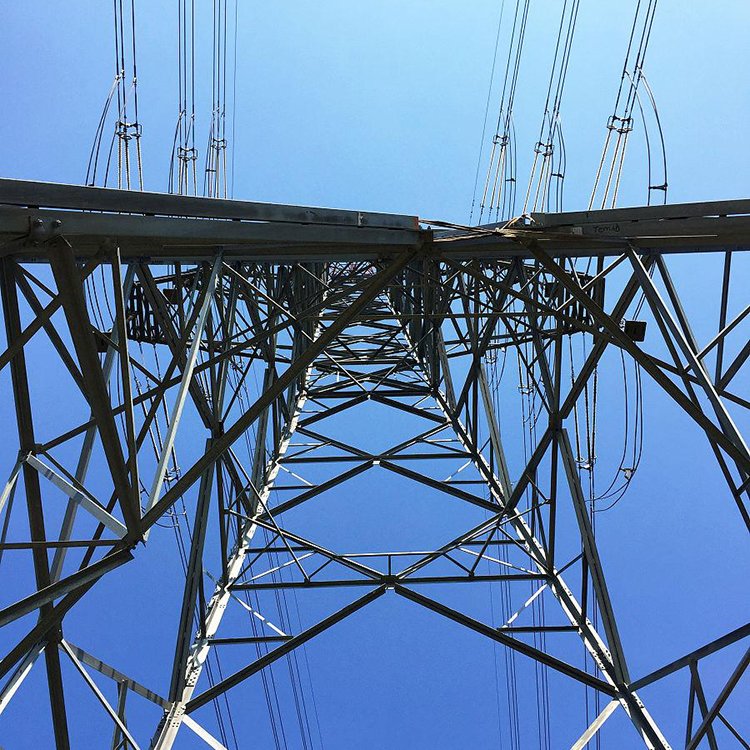
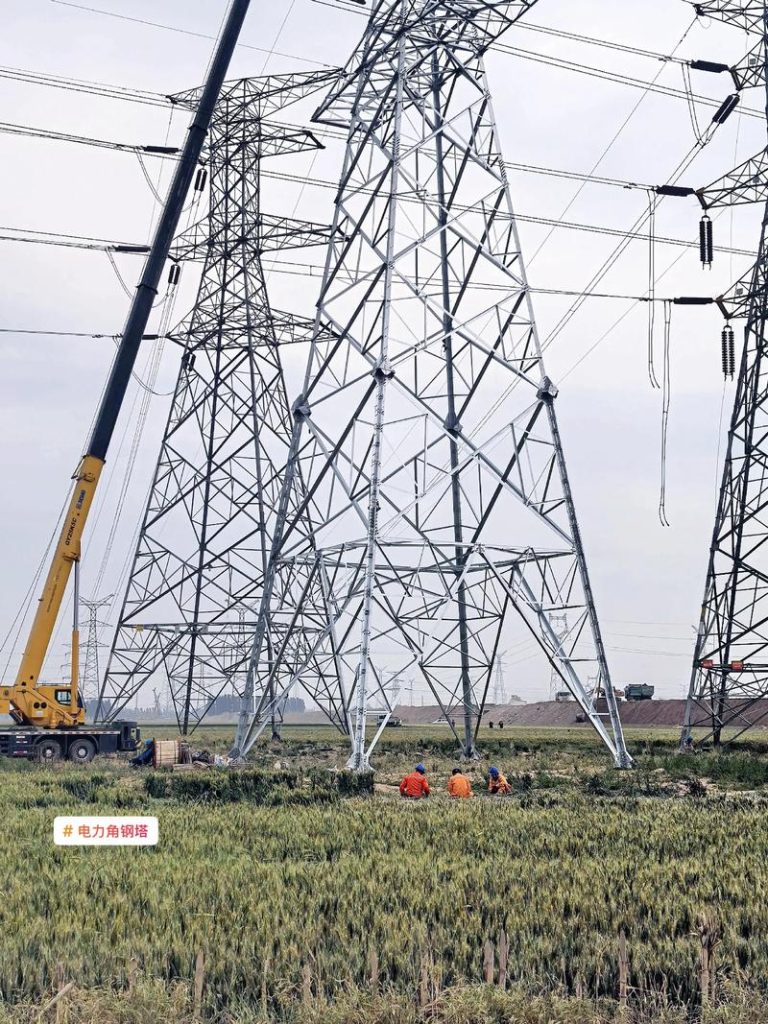
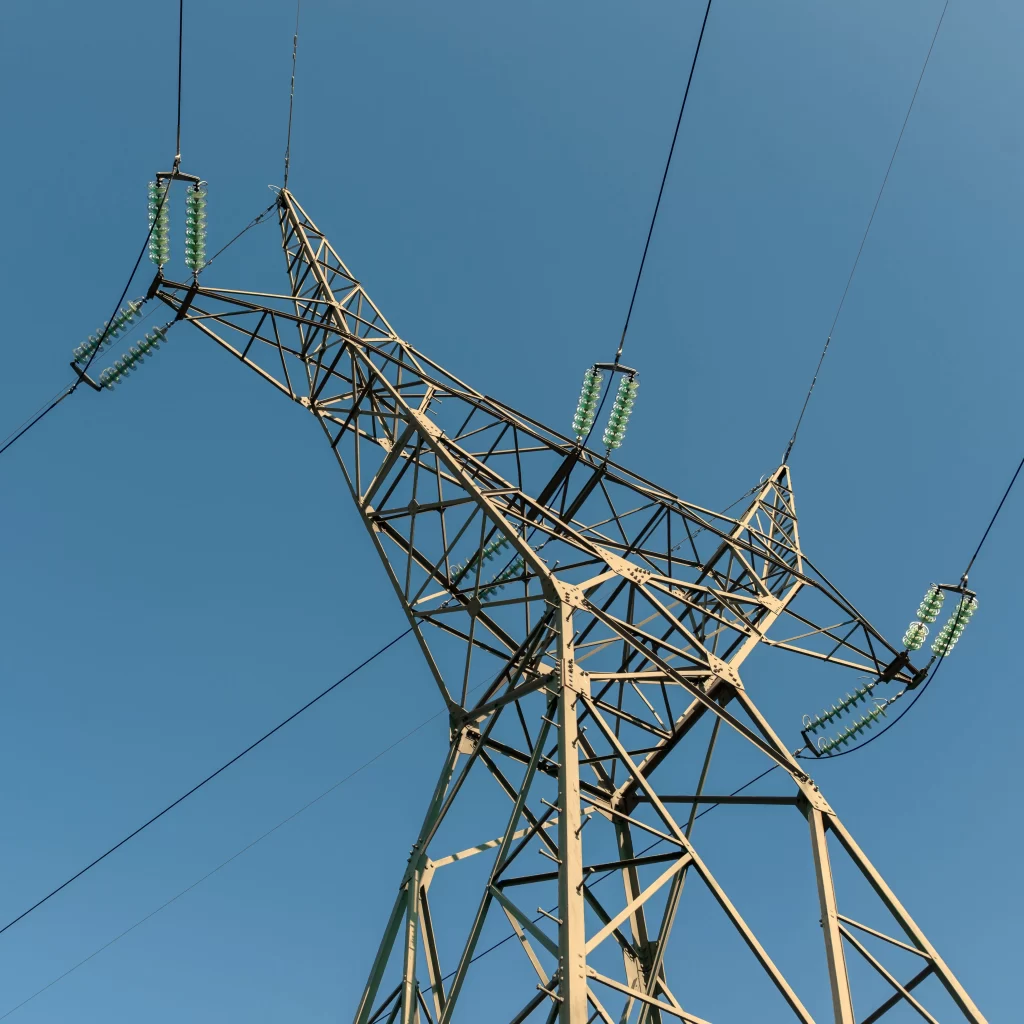
Corrosion and Protection of Galvanized Components of Steel Towers. Corrosion Prevention and Control Countermeasures for Transmission Line Tower Structures. The reliability of anti-corrosion protection performance of transmission line tower structural components is one of the important factors affecting the long-term safe operation of lines. Tower structural components generally adopt hot-dip galvanizing for anti-corrosion. Based on the corrosion characteristics of galvanized coatings in atmospheric environments and observation data on the corrosion of transmission towers in some areas of Beijing, this paper proposes countermeasures for the corrosion prevention and control of transmission line towers, for reference by relevant departments and technical personnel. 1 Anti-corrosion effect of hot-dip galvanized coatings on steel. The use of hot-dip galvanizing for anti-corrosion of transmission line towers can give tower structures a relatively long outdoor exposure service life. During hot-dip galvanizing, zinc and steel diffuse into each other to form a zinc-iron alloy layer. The zinc-iron bond is metallurgical and firmer than ordinary coating bonds. The zinc layer exposed to the atmospheric environment will not fall off for decades. When the galvanized coating has small cracks or damage, zinc will continue to prevent the steel at the cracks or damage from rusting in the form of sacrificial anode. This is the main feature that makes galvanized coatings superior to other coatings and platings. Because zinc can dissolve in acids and strong bases, hot-dip galvanized coatings can only be used in general atmospheric and natural water environments. When the galvanized coating contacts air and water, slight electrochemical corrosion can occur. In clean air areas such as rural areas and forests, the galvanized coating can last for many years, while in industrial pollution areas and coastal areas, the service life of the galvanized coating is very short. The service life of the zinc layer is directly proportional to the zinc layer thickness. Table 1 shows typical data proposed by the Japan Galvanizers Association [1].
————————————————–
2 Atmospheric corrosion mechanism of galvanized coatings 2.1 Corrosion effects of major atmospheric pollutants on galvanized coatings. The main pollutants in the atmosphere are SO2 and NOx. Experimental studies show that the corrosion effect of NOx on galvanized coatings is not obvious, while SO2 is the main cause of corrosion of galvanized coatings. Its corrosion process is mainly an electrochemical corrosion process under a thin liquid layer of SO2 wet deposition. The corrosion products formed on zinc in a high-humidity SO2 gas chamber are similar to the corrosion products formed on zinc in a natural environment with high-concentration SO2 pollution. The effect of SO2 wet deposition on zinc corrosion is greater than that of SO2 dry deposition. The heavier the SO2 pollution, the more serious the zinc corrosion. Under a certain SO2 concentration, humidity is an important factor affecting zinc corrosion, that is, the higher the humidity, the faster the zinc corrosion [2]. Exposure tests conducted at different locations and at different times show that environmental temperature, humidity, and SO2 jointly affect zinc corrosion, and SO2 pollution is the main factor controlling zinc corrosion [3,4]. The atmosphere in industrial cities is dominated by SO2 pollution. In coastal areas, sea salt particles (chloride wet deposition) are the main pollution factor. In forests and tropical rainforest areas, the air is relatively clean, and zinc corrosion belongs to humid atmospheric corrosion. Reference [5] analyzed the effect of different heights on steel corrosion in the Shenyang area, where industrial atmospheric pollution is severe, and found that the corrosion rate is greatest at the ground surface, decreases significantly within the height of 1-9 m, and decreases only slightly within the height of 9-25 m, indicating that the influence of atmospheric corrosion gradually weakens with increasing height. Monitoring results of the main pollutant SO2 in the test area show that SO2 concentration is directly proportional to the material corrosion rate. The SO2 concentration is relatively high at the ground surface, smallest at the 9 m height, and largest at the 25 m height. However, at the 25 m height, the wind speed is greater than at the ground surface, which is conducive to the drift and diffusion of pollutants. 2.2 Corrosion observation results of towers in some areas of Beijing. In order to understand the impact of atmospheric corrosion on transmission line tower structures, observations were made of the galvanized coating conditions of a 220 kV line tower located near the Third Ring Road and in operation for about 20 years, and of a newly built 220 kV line tower in a suburban area near a river channel, farmland, expressway, and town. The observation results show that the galvanized coating conditions of towers in urban areas and near highways are obviously inferior to those of towers located in river channel and farmland areas, indicating that atmospheric pollutants have a significant impact on tower galvanized coatings.
| Region | 400 g/m² | 500 g/m² | 600 g/m² | 600 g/m² (matte) | ||||
|---|---|---|---|---|---|---|---|---|
| Corrosion amount / [g·(m²·a)⁻¹] | Durable years / a | Corrosion amount / [g·(m²·a)⁻¹] | Durable years / a | Corrosion amount / [g·(m²·a)⁻¹] | Durable years / a | Corrosion amount / [g·(m²·a)⁻¹] | Durable years / a | |
| Heavy industrial area | 40.1 | 9 | 40.6 | 11 | 40.1 | 13 | 18.1 | 30 |
| Coastal area | 10.8 | 33 | 10.9 | 41 | 10.8 | 50 | 11.5 | 47 |
| Suburban area | 5.4 | 67 | 5.2 | 86 | 5.2 | 104 | 5.2 | 104 |
| Urban area | 17.5 | 21 | 17.7 | 25 | 17.7 | 30 | 17.5 | 31 |
————————————————–
3 Main technical requirements for hot-dip galvanizing. Hot-dip galvanizing of transmission towers adopts the national standard GB/T13912-92, which clearly specifies the main technical and quality requirements. The requirements for galvanized coating quality mainly include appearance, zinc layer thickness (adhesion amount), and adhesion strength. 3.1 Appearance. The purpose of hot-dip galvanizing is anti-corrosion rather than decoration, and quality cannot be judged by aesthetics. Qualified galvanized parts should have a clean, smooth surface without damage. Immediate passivation treatment after galvanizing can avoid or reduce the occurrence of “white rust” and ensure a clean surface of the galvanized parts. Burrs, nodules, and zinc ash (dross) are caused by poor galvanizing process. Although they do not affect corrosion resistance, they affect appearance and may affect installation. Local missed plating is not allowed by the standard. Small missed plating or coating damage is allowed to be repaired. 3.2 Galvanized coating thickness and adhesion strength. Galvanized coating thickness is directly proportional to corrosion-resistant life, and adhesion strength is the guarantee of corrosion-resistant life and must comply with relevant standards. The thickness and uniformity of the galvanized coating can be tested by the copper sulfate test method, and the adhesion strength of the zinc coating can be tested by hammering, or by the hard knife test (strong applicability).
————————————————–
4 Corrosion prevention and control countermeasures for transmission line towers. Based on actual observations and test results [6,7], combined with the galvanizing quality requirements for towers, the following corrosion prevention and control countermeasures for transmission line towers are proposed: 4.1 Strengthen tower supervision and attach importance to on-site inspection of zinc layer thickness and zinc layer adhesion strength. Users should not only focus on a neat and bright appearance while neglecting the requirement for galvanized coating thickness, or even ignoring galvanized coating thickness inspection. Relevant studies show that 0.2% aluminum is enough to significantly reduce the galvanized coating, causing a large area of galvanized coating to fail to meet requirements. Therefore, tower supervision work should be strengthened. During supervision, importance should be attached to the inspection of galvanized coating thickness and galvanized coating adhesion strength. If conditions permit, on-site sampling inspection of galvanized coating thickness before tower assembly should be carried out. 4.2 Formulate special requirements for special tower types. There are more and more large crossing projects of transmission lines. Their towers are tall and structurally complex, and it is inconvenient to detect corrosion during operation, while repair and replacement are difficult. For the galvanizing of steel structural components of such towers, special requirements should be proposed. For local materials, special requirements for increasing the galvanized coating thickness may be adopted. During construction, galvanizing quality inspection of tower steel structural components should be carried out. 4.3 Prevention and control measures in areas with severe atmospheric pollution. For transmission lines crossing coastal areas, mines, industrial pollution areas, and other areas with severe atmospheric pollutants, tower anti-corrosion measures should be taken according to the corrosion characteristics of pollutants in the local environment on towers. Generally, hot-dip galvanizing is still used for anti-corrosion, but the galvanized coating thickness should be increased to ensure the corrosion-resistant life of the tower galvanized coating. 4.4 Formulate relevant hot-dip galvanizing standards. Considering the corrosion impact of atmospheric pollutants on tower galvanized coatings, for transmission towers crossing areas with severe industrial atmospheric pollution, such as mines and coastal areas, standards for hot-dip galvanizing quality requirements in these areas should be formulated to facilitate tower supervision and also provide relevant technical conditions for tower buyers. When tower components have small missed plating or coating damage, repair is allowed. At present, the methods used are various and there is no standard to follow. A hot-dip galvanized coating repair standard should be formulated as soon as possible to ensure the repair quality of hot-dip galvanized coatings.
Engineering progress management system. A radar chart made with Flash MX dynamically accesses the database, reflecting the construction period (automatically collected by computer) and the progress of divisional projects in two forms: absolute data and relative data (percentage), and can automatically adopt the completion date of divisional projects. Once the database is updated, the client automatically updates, realizing the unification and synchronization of data between the management department and the construction site. 3.3.4 Data management system. In the data management system, computer management of contracts, drawings, measure plans, engineering briefs, specifications and standards, engineering pictures, audio-visual materials, management documents, document issuance and receipt is realized; a fast file upload system has been developed, and file formats are not restricted. The program also realizes automatic classification, retrieval, and summarization according to file names, thereby reducing the difficulty of system maintenance. 3.3.5 Customer service system. In the customer service system, customer complaint and message modules have been developed, reflecting the idea of respecting customers, strengthening the management function of serving customers, and establishing an external constraint mechanism for construction production management; management modules for engineering return visits and customer satisfaction surveys have been established, realizing online collection of information on engineering quality and customer satisfaction. Through automatic analysis, the computer can issue warnings for nonconforming items (with color warnings). 3.3.6 Project management plan system. The project management plan system includes the work plans of engineering professional managers and the construction operation plans of project department construction personnel. The computer can prompt engineering personnel about the progress of their work plans in the form of automatically popping up dialog boxes according to preset times. 3.4 System maintenance of PIMS. In addition to integrating and consolidating the vast amount of information of various specialties related to the project, PIMS also fully considers the characteristics of construction enterprises, such as detailed division of professional management departments, relatively scattered and locally concentrated information, specialized management by management personnel, and large regional spans between management departments and project departments. It also takes into account the workload of system maintenance personnel, opens the functions of writing, deleting, and modifying vast and scattered information at the client side, and realizes the function of client-side data updating and system maintenance, which lays the foundation for the long-term normal operation of the system. 3.5 Security and stability of PIMS. All password systems of this system are stored in the form of a database. Moreover, all database files are stored in non-readable directories to ensure that database password files cannot be downloaded, and “=” and “or” errors are removed from ASP programs. All operations on PIMS information, such as browsing, querying, statistics, editing, modifying, and deleting, require a certain permission level. Permission management is divided into 9 levels, according to different user groups and different confidentiality levels of information. There are obvious distinctions among information browsing, editing, and deleting operations, and there are strict differences in security permissions for ordinary information, important information, and confidential information. Generally, the higher the permission level, the greater the user’s permissions and the larger the scope of information operations. In the project management plan system, however, there is an exception: high-permission-level users (except system administrators) cannot perform any operations on the information of low-permission-level users. Here the system reflects respect for individuals. If a user stops using the system for a certain period (20 min, can be changed), the system will automatically lock and implement security protection to prevent others from taking the opportunity to use the user’s management permissions to damage the database. When the user uses it again, the login password must be re-entered and pass the system security check. The PIMS system has strict permission management. On the Internet, it can withstand certain risks and can well protect the enterprise’s confidential information.